2026 Best Wax Flaking Conveyor for Global Buyers?
Choosing the 2026 Best Wax Flaking Conveyor for Global Buyers requires more than comparing prices and stainless-steel photographs. A reliable Wax Flaking Conveyor must handle warm wax, uneven feed rates, and continuous production without creating excessive buildup. Buyers should examine belt material, cooling performance, scraper design, drive stability, and cleaning access. These details become visible during real operation. A conveyor may look impressive in a catalog, yet struggle when wax enters at changing temperatures. That difference matters.
This guide compares practical features for factories, distributors, and engineering teams worldwide. It considers throughput, flake thickness, energy use, maintenance time, and installation requirements. Operator safety and food-contact suitability may also influence the final choice. Regional voltage, climate, spare-part availability, and technical support deserve equal attention. Small design choices can reduce stoppages. For example, an accessible tensioning system can shorten belt adjustments after a long production shift. Simple matters.
Experience suggests that the cheapest machine is rarely the lowest-cost solution over several years. However, premium pricing does not automatically prove superior performance. Buyers should request test videos, material certificates, layout drawings, and references from comparable facilities. Some suppliers provide excellent equipment but weak documentation. That weakness should not be ignored. Specifications can also be misunderstood when translations are unclear. Independent verification remains valuable, especially for international purchases. This introduction will help global buyers assess performance honestly, identify hidden risks, and select a conveyor that matches their actual wax-processing conditions rather than an idealized brochure.
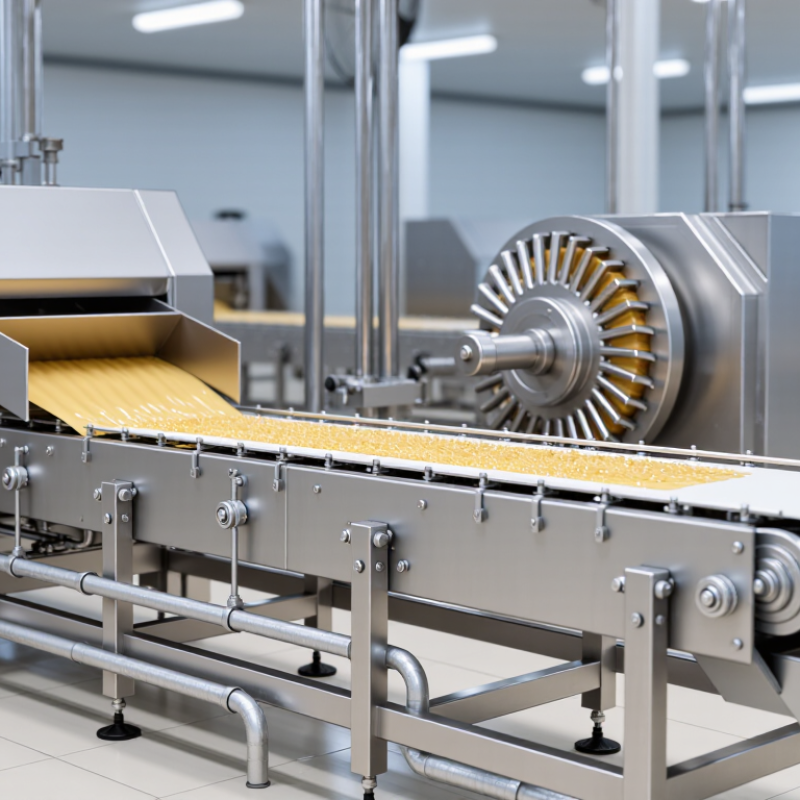
What Is a Wax Flaking Conveyor and How Does It Work?
A wax flaking conveyor moves solid wax flakes from a cooling unit to storage or packing equipment.
The process begins when molten wax spreads across a chilled drum or moving steel belt. As the surface cools, a scraper removes thin flakes. The conveyor then receives them through a controlled transfer point. A slow belt speed helps prevent breakage, while cleats reduce sliding on inclined sections. It sounds simple. It is not always simple.
Grand View Research estimated the global paraffin wax market at about USD 6.7 billion in 2023, with continued growth expected through 2030. This demand increases pressure on stable, hygienic conveying systems. CEMA’s Belt Conveyors for Bulk Materials, Seventh Edition, stresses that belt selection must reflect bulk density, temperature, moisture, and material flow. Wax flakes can bridge inside chutes when they soften. They can also fracture when dropped too aggressively.
Operators should check wax temperature, belt tension, scraper alignment, and transfer height during production. A practical line may use a food-grade or industrial polymer belt, depending on the final application. The wrong surface can collect residue. This is often overlooked. Dust control also deserves attention, because fine wax particles may accumulate around motors, guards, and discharge points. Actual performance depends on wax formulation, flake thickness, cooling efficiency, and cleaning discipline, so a laboratory test alone may not predict factory behavior.
Key Conveyor Types for Different Wax Flaking Applications
2026 Best Wax Flaking Conveyor for Global Buyers?
Wax flakes behave differently after cooling. They can fracture, bridge, or soften against warm surfaces. Conveyor selection must follow the application, not only the required capacity. According to Grand View Research, the global conveyor systems market was valued at over USD 10 billion in 2023, reflecting wider investment in automated material handling. Yet wax remains a specialized case.
A flat belt conveyor suits long, horizontal movement of dry flakes. Its low drop height helps reduce breakage.
For enclosed transfer, a screw conveyor can control dust and protect the product from outside contamination. It needs careful clearance design, however. Excessive compression may generate heat and form clumps.
Vibratory conveyors are useful for gentle metering, especially before filling or packaging. They offer accurate flow, but unstable amplitudes can cause uneven feeding. Short routes only.
Vertical movement often requires a bucket elevator. It saves floor space, although wax buildup around the buckets can increase cleaning time. A scraper conveyor may handle heavier flakes, but its contact surfaces demand precise temperature control.
The 2024 report from Mordor Intelligence identifies energy efficiency, automation, and hygienic design as major conveyor development trends. These priorities matter, but they do not replace trials with the actual wax grade.
A laboratory test can miss seasonal humidity. That is an uncomfortable weakness. Global buyers should check residence time, belt temperature, cleanability, motor loading, and emergency access before final approval.
How to Evaluate Capacity, Materials, and Conveying Performance
2026 Best Wax Flaking Conveyor for Global Buyers?
How to Evaluate Capacity, Materials, and Conveying Performance
A reliable wax flaking conveyor should match your real production rate, not only its catalog rating. Measure kilograms per hour during normal operation, including start-up delays and cleaning time. A machine rated for 1,000 kg/h may deliver less when flakes bridge inside the hopper. Check the flake size, bulk density, and discharge pattern before selecting belt width and speed.
Material selection affects service life and product cleanliness. Stainless steel 304 suits many dry wax applications, while 316 may help in corrosive cleaning environments. Inspect belt joints, rollers, scrapers, and hopper walls closely. Smooth welds reduce residue buildup. They also make routine sanitation easier. Static electricity can cause flakes to cling to surfaces, so grounding and suitable belt materials deserve attention.
Conveying performance depends on more than motor power. Compare horizontal and inclined capacity, belt speed control, transfer-point design, and overload protection. A short test with your actual wax flakes can reveal slipping, dusting, or uneven feeding. Do not trust perfect laboratory figures. Real factories have temperature changes, operator delays, and occasional blockages. I would leave capacity margin, although excessive oversizing can waste energy and space. Record noise, cleaning time, and product loss during the trial. Those details often matter more than a polished specification sheet.
2026 Best Wax Flaking Conveyor for Global Buyers?
How to Evaluate Capacity, Materials, and Conveying Performance
The chart estimates continuous conveying capacity for wax flakes at a belt speed of 0.5 m/s, using a 70% loading factor and bulk densities of 450–650 kg/m³. Higher-density flakes increase throughput, while actual performance depends on belt width, surcharge angle, moisture, flake size, incline, and loading consistency.
Capacity
Compare t/h at the required belt width and speed.
Materials
Use corrosion-resistant contact surfaces and food-grade options where required.
Performance
Check stable feeding, low spillage, cleaning access, and safe speed control.