
Employment Application Apply
China’s power system is changing quickly, and stable voltage matters to factories, workshops, and homes. The National Energy Administration reported that China’s electricity consumption reached about 9.85 trillion kilowatt-hours in 2024. That scale makes power quality more than a technical detail. It affects sensitive equipment, production schedules, and operating costs.
An Inverter Voltage Stabilizer can help manage voltage fluctuations, but “best” depends on the application. A textile workshop with several motors has different needs from a small electronics line. Input-voltage range, rated capacity, response time, waveform quality, protection features, and service support all deserve close attention. Labels alone are not enough. A unit may look impressive on paper and still be poorly matched to a real load.
Grid investment is also part of the wider picture. The International Energy Agency’s 2023 report, Electricity Grids and Secure Energy Transitions, says global grid investment needs to more than double by 2030 to meet climate and energy goals. That finding highlights the challenge of modernizing power networks, though it does not prove that every site needs a stabilizer. That distinction matters.
This guide compares inverter voltage stabilizers available in China using practical selection criteria and verifiable product information. We will examine where each type fits, what specifications mean, and which trade-offs buyers should question. There is no perfect choice. A careful match is usually better than the biggest unit.
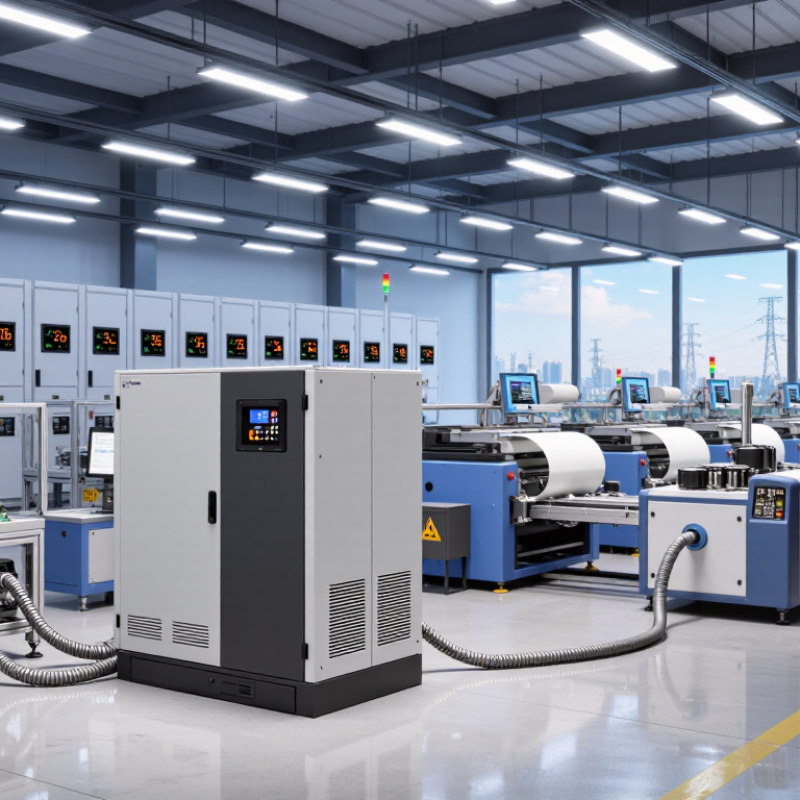
An inverter voltage stabilizer helps keep the electricity supplied to appliances within a steadier range. The name can describe different designs, so check the product’s wiring diagram and specifications. In a common setup, a control circuit continuously measures incoming voltage. If it rises or falls, the stabilizer adjusts the output using electronic switching or transformer taps. Small corrections happen quickly. No magic involved.
An inverter section works differently. It converts direct current from a battery into alternating current for household devices, and some systems regulate that output electronically. When mains power is available, the unit may pass it through or charge the battery, depending on its design. Picture a refrigerator starting up while a lamp stays on: voltage dips can affect both, but a correctly sized system helps limit those fluctuations. It cannot repair damaged wiring or guarantee protection from every surge. That distinction matters.
For a practical assessment, compare the input-voltage range, output accuracy, rated load, and response to startup surges. A unit that looks adequate on paper may struggle with a motor’s brief inrush current. Installation and ventilation matter, too. I would not choose by the word “inverter” alone; the exact circuit and intended load deserve a closer look.
Choosing the best inverter voltage stabilizer in China depends on the load, grid condition, and installation site. Common options include relay-based, servo-motor, static, and IGBT inverter stabilizers. Relay models suit simple household equipment and moderate voltage changes. Servo units offer smoother correction for workshops, pumps, and air-conditioning systems. Static and IGBT models respond faster, making them useful for computers, medical instruments, and precision machinery. Not always.
Chinese suppliers often provide single-phase and three-phase designs. Check the rated capacity in kVA, not only the appliance wattage. Motors may draw two to seven times their normal starting current. A practical safety margin prevents overheating and nuisance shutdowns. Look for a wide input range, stable output accuracy, short response time, overload protection, surge protection, and thermal alarms. A bypass function can keep essential equipment running during maintenance. An LCD display also helps technicians read input voltage, output voltage, load percentage, and fault codes.
During site inspections, I measure voltage at different hours rather than trusting one reading. A factory may show 180 volts at noon and 230 volts at night. That difference changes the suitable stabilizer type. Wider input coverage sounds attractive, but it can reduce efficiency under extreme conditions. I would also verify cooling performance, terminal quality, noise level, and documented test results. A carefully sized unit is usually more reliable than the largest model available. Multi-year warranties matter, yet local service capability deserves equal attention. Some specifications look impressive on paper, but field wiring and ventilation can still decide the outcome.
Choosing the best inverter voltage stabilizer requires more than comparing prices or efficiency labels. China’s industrial and commercial sites can face voltage dips, harmonics, dust, heat, and unstable loads. The International Energy Agency’s Electricity 2024 report expects global electricity demand to grow by about 3.4% annually through 2026. More connected equipment means power quality deserves closer inspection.
Start with voltage accuracy, response time, overload capacity, and waveform quality. IEC 61000-4-30 provides guidance for measuring power-quality characteristics, including voltage variations and harmonics. A reliable stabilizer should show tested results, not vague claims. Check whether its output remains stable during motor starting, welding, or sudden load changes.
Efficiency also matters, but a higher figure is not automatically better. Cooling design, standby consumption, and service access can affect real operating costs. In practice, a cabinet that runs quietly at 25°C may behave differently in a hot, dusty workshop. This is where specifications can disappoint.
Tips: Request test reports with model numbers and test conditions. Confirm input range, correction speed, protection functions, and battery compatibility. Measure the site load for at least one working cycle. Do not size the unit only from the average load; startup current can be several times higher. I would also leave reasonable capacity headroom. It costs more initially, but undersizing is a common and avoidable mistake.
References: International Energy Agency, Electricity 2024; IEC 61000-4-30.
Choosing a stabilizer starts with the supply, not the product label. Measure the lowest and highest input voltage at the installation site, ideally during busy and quiet periods. A unit’s correction range should cover those readings while delivering voltage suitable for the connected equipment.
Local conditions vary. A workshop outside a city may see different dips from an apartment in a dense urban area.
Next, calculate the load. Add the running power of every device, then account for motors, pumps, or compressors that draw extra current when starting. Check both watts and volt-amperes on equipment specifications; they are not interchangeable. Leave capacity headroom rather than sizing exactly to the total.
Also confirm whether the supply is single-phase or three-phase, and ask a qualified electrician to verify cable size, grounding, and installation conditions. I have seen “enough capacity” on paper become a poor fit once a motor starts. That is easy to overlook.
Tips: Record voltage readings and list each load before comparing models. Check overload protection, response time, and ventilation needs. If the load changes often, sizing deserves another look; estimates can be wrong.
Installing an inverter voltage stabilizer starts with the load, not the product label. Add the running wattage of connected equipment, then account for appliances with motors, which may draw extra current at startup. A qualified electrician can check the supply voltage, cable size, earthing, and circuit protection before installation. Keep the unit dry, ventilated, and accessible; a cramped cupboard can trap heat. Leave enough clearance around its vents. Small details matter.
Safety depends on correct connections and realistic expectations. Switch off the supply before inspection, and never open a live unit to investigate a fault. Follow the manufacturer’s wiring diagram and local electrical requirements. If the stabilizer clicks repeatedly, overheats, smells burnt, or shows unstable output, disconnect the load and arrange a professional check. It may be tempting to blame the stabilizer, but loose terminals or an overloaded circuit can produce similar symptoms.
Maintenance is usually simple, but not optional. Every few months, look for dust buildup, damaged cables, unusual vibration, and blocked ventilation. Clean the exterior with a dry cloth after isolating power; avoid spraying liquids into openings. Keep a basic log of voltage readings and fault events. I would not treat one normal reading as proof that everything is fine, especially where supply conditions change by season. Periodic inspection helps catch wear before it disrupts sensitive equipment.
Installation, Safety, and Maintenance Considerations
For a 220 V supply, a ±7% voltage-deviation reference corresponds to 204.6–235.4 V. This is a supply-voltage reference, not a stabilizer’s input range or output guarantee. Check the device’s rated input range and load capacity, install it in a dry, ventilated location, and follow the manufacturer’s instructions for inspection and maintenance. Isolate power before servicing; electrical work should be handled by a qualified professional.