10 Metal Stamping Tips for Choosing the Right Supplier?
Choosing a Metal Stamping supplier can affect part consistency, delivery stability, and the cost of each production run. A low quote may look attractive, but tooling assumptions, inspection methods, and material control can change its real value. Small details matter. Ask how the supplier manages coil traceability, press capacity, die maintenance, and dimensional checks. Request sample parts and review inspection records, not just a polished capability sheet.
The right partner should understand your part’s geometry, tolerances, finish, and expected volume. They should also explain what happens when a trial run reveals burrs, springback, or inconsistent dimensions. Clear answers are useful; specific evidence is better. Look for documented quality procedures, relevant industry experience, and realistic production plans. A supplier’s willingness to discuss limits can be more telling than a long list of machines.
These ten tips will help you compare suppliers with practical questions rather than promises alone. Consider communication, engineering support, tooling ownership, lead times, and contingency planning alongside price. Visit the facility if possible, and observe how parts move from press to inspection and packaging. One visit cannot reveal everything. A checklist helps, but it cannot replace careful follow-up or a well-defined part specification. Even experienced teams sometimes overlook assumptions early in sourcing; reviewing them before production can prevent costly surprises later.
Define Part Specifications: Material, Gauge, Tolerances, and Annual Volume
A useful supplier conversation starts with a clear part specification. Name the material grade, temper, and any required coating; “stainless steel” alone leaves too much open to interpretation. State the gauge and acceptable thickness range, since sheet variation can affect forming force, springback, and fit. Small details matter. Include grain direction when bends or visible surfaces make it relevant, and mark the intended burr direction on the drawing.
Set tolerances around how the part functions, not around what looks precise on paper. Identify critical hole locations, mating surfaces, and flatness requirements. A ±0.1 mm tolerance may be necessary for a locating feature, but unnecessary elsewhere. Overly tight limits can increase inspection time and scrap without improving assembly. Be specific. Ask how the supplier will measure key dimensions and what inspection records are available; a measurement method should suit the feature.
Share realistic annual volume, expected order sizes, and any seasonal changes. A forecast of 50,000 parts per year means little if releases arrive in uneven batches. Discuss prototype quantities, production ramp-up, and likely design revisions before tooling decisions are fixed. This is where I would pause and check assumptions: demand forecasts often change. A capable supplier should explain how volume affects tooling, lead time, and unit cost, rather than quoting one number without context.
Verify Quality: ISO 9001, IATF 16949, PPAP, and a Cpk Benchmark of 1.33
A metal stamper’s certificate is a starting point, not proof that every press run will meet your drawing. The ISO Survey 2022 recorded 1,265,216 valid ISO 9001 certificates across 188 countries and economies. That widespread adoption reflects quality-system use, but it does not guarantee part-level capability. Ask whether the supplier’s ISO 9001 system covers the actual plant and processes making your parts. For automotive work, verify current IATF 16949 certification and its scope.
Request the PPAP package for the specific part, not a generic sample. Check material certifications, control plans, measurement results, and approvals for any process changes. AIAG’s PPAP guidance frames submission as evidence that production can consistently meet requirements. Look for capability studies tied to the right tool, cavity, material, and measurement method. A Cpk of 1.33 is a common benchmark, but customer requirements and process risk may call for more. Cpk only helps when the process is stable.
One clean chart can still hide variation. Ask for sample size, collection dates, and evidence that the gauge is suitable. Compare the study with recent production records, especially after tooling maintenance or a material change. If the supplier cannot explain a low result plainly, pause. A certificate should open the conversation, not end it.
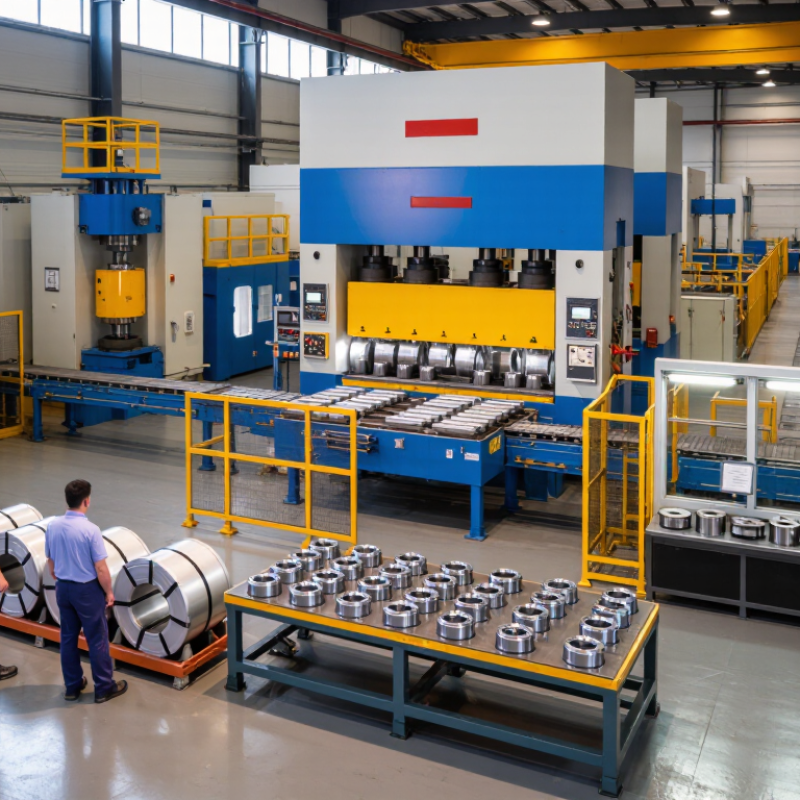
Match Press and Tooling Capacity to Part Size, Tonnage, and Production Volume
A supplier’s largest press is not automatically the right press for your part. Match the machine’s bed size, shut height, stroke, and feed system to the actual drawing and die layout. A long, narrow bracket may need generous bed space, while a compact, thick component may demand higher tonnage. Check the force required across the full stroke, not just the press’s headline capacity. Uneven loading can affect tool life and part consistency.
Tooling capacity matters just as much. Ask whether the supplier can build, maintain, and adjust a die with your part’s dimensions and tolerances. For a progressive die, confirm the available space for stations, pilots, and strip handling. Then compare that setup with your expected volume. A short run may suit a simpler tool; steady, high-volume demand may justify more automation and a longer-lasting die. Ask for evidence: sample parts, inspection records, and a clear plan for tool maintenance. That matters.
One easy detail to overlook is future variation. A design change or material adjustment can alter forming force and feeding needs. I have seen sourcing discussions focus on press tonnage while leaving these practical questions vague. That is not ideal. Share the current drawing, material, thickness, annual volume, and likely order pattern. Ask the supplier to explain how its press and tooling fit those details, including any limits or assumptions.
Compare Total Cost: Tooling Life, Scrap Rate, and Cost per Good Part
A low piece price can look attractive until tooling, scrap, and inspection costs are included. Compare supplier quotes using the same annual volume, material specification, tolerances, finish, and packaging assumptions. Otherwise, the numbers are not truly comparable. A spreadsheet helps. It can also mislead if it treats every part as equally usable.
Ask how the supplier estimates tool life and what maintenance is included. A die expected to run many hits may still need frequent sharpening or adjustment. Request the assumptions behind the estimate, plus records from similar production runs where available. Tool ownership and repair charges matter, too. Small details add up.
Scrap rate changes the cost of each acceptable part. For example, if a run produces 10,000 pieces but 400 fail inspection, divide the full production cost by 9,600 good pieces—not by 10,000. Include rework, sorting, and material loss where relevant. A supplier quoting a slightly higher unit price may deliver a lower cost per good part through steadier output. Estimates are not guarantees, though. Ask how scrap is tracked, what triggers corrective action, and whether trial-run results match the quotation.
Compare Total Cost: Tooling Life, Scrap Rate, and Cost per Good Part
Illustrative comparison for four unnamed suppliers. Estimated cost per good part includes processing, tooling amortization, and scrap; lower cost is better.
| Supplier | Estimated Tooling Life | Scrap Rate | Cost per Good Part |
| Supplier A | 500,000 strokes | 2.4% | $1.24 |
| Supplier B | 350,000 strokes | 1.1% | $1.18 |
| Supplier C | 700,000 strokes | 3.8% | $1.31 |
| Supplier D | 600,000 strokes | 1.6% | $1.14 |
These illustrative estimates show why quoted piece price alone can be misleading. Validate tool life, scrap assumptions, production volume, and tooling amortization with each supplier before comparing quotes.
Assess Delivery Risk with Lead-Time, On-Time Delivery, and Backup-Capacity Data
10 Metal Stamping Tips for Choosing the Right Supplier?
A quoted lead time is only a starting point. Ask for the typical range from approved drawing to first shipment, then compare it with recent production records. A six-month view can reveal seasonal pressure that an annual average hides. Check how the supplier defines on-time delivery: against the original promise or a revised date? The distinction matters. Request figures by month, plus explanations for late orders, such as material shortages, tool repairs, or scheduling changes. Ask for evidence, not just a polished percentage.
Tips: Request lead-time ranges, monthly on-time delivery data, and examples of recovery plans. Ask how often backup presses are tested. Confirm whether backup capacity includes trained operators, compatible tooling, and raw material—not merely an available machine. A spare press may look reassuring on paper.
Then test the numbers against your own order pattern. If your parts need a particular die or steel grade, ask how quickly a second production line could actually run them. Discuss capacity during maintenance, labor absences, and demand spikes. A supplier might report strong delivery performance while relying on overtime; that can work briefly, but it is not much of a safety net. I would also ask for a sample escalation timeline, from missed material arrival to a revised ship date. Data can still be incomplete, and I’ve seen neat dashboards obscure awkward details. That uncertainty deserves a direct conversation.