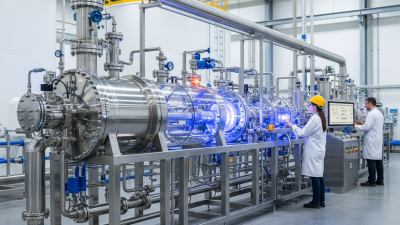
What is a glass wiped film evaporator and how does it work?
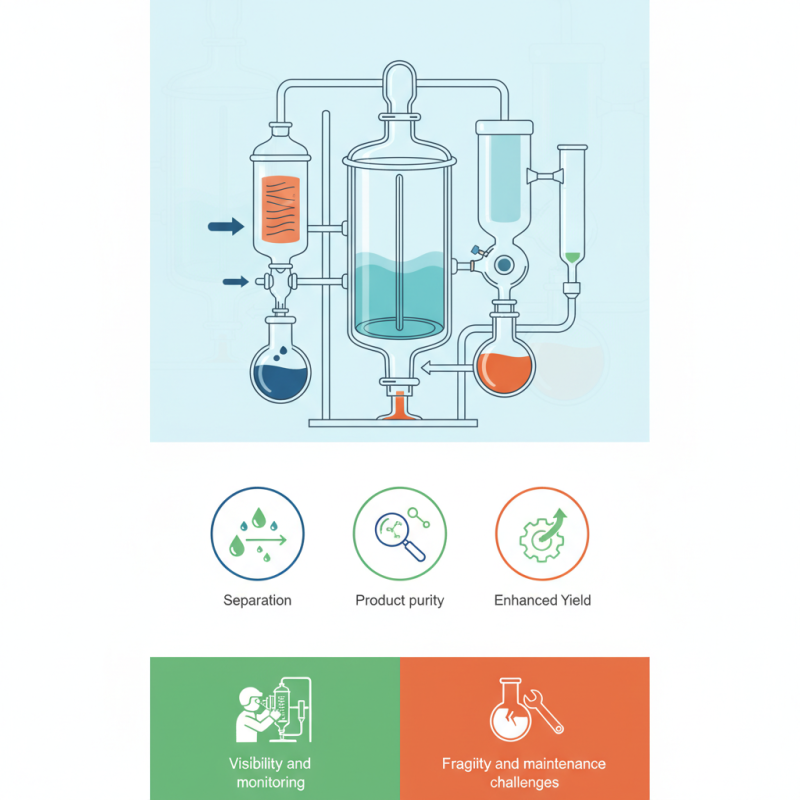
The glass wiped film evaporator is an essential piece of equipment in various industries. It efficiently separates components of different boiling points. This apparatus uses a unique design that enhances product purity and yield.
In a glass wiped film evaporator, a thin film of liquid is created by a rotating wiper. This allows the substance to heat uniformly. The glass construction provides visibility during the process. Operators can monitor the separation closely.
Despite its advantages, challenges still exist. Maintenance can be tricky. The glass material, while beneficial, is fragile. Care is needed to ensure durability. A glass wiped film evaporator represents modern engineering, yet it requires thoughtful handling.
What is a Glass Wiped Film Evaporator?
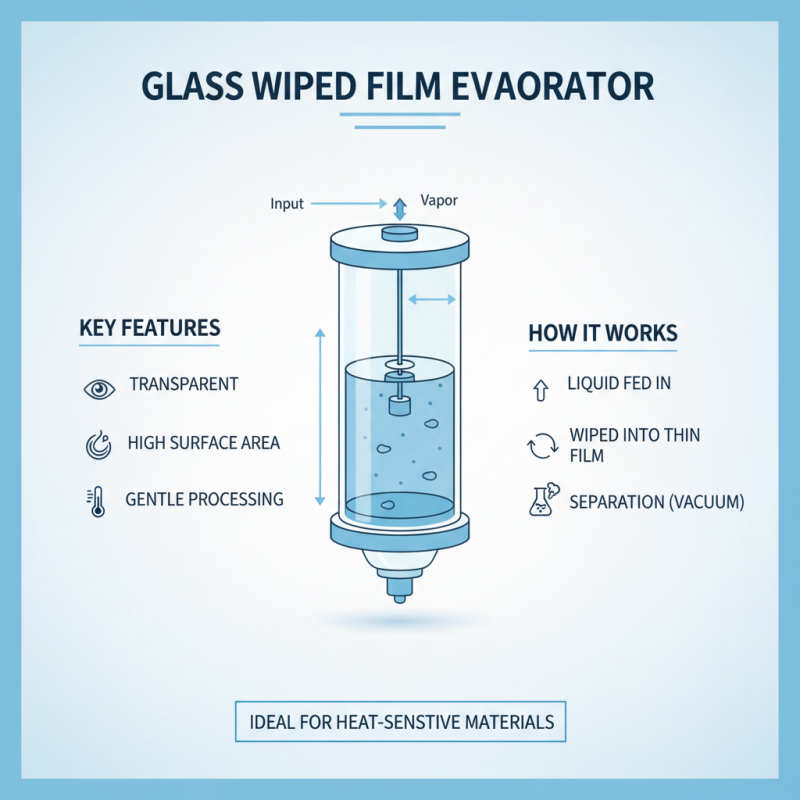
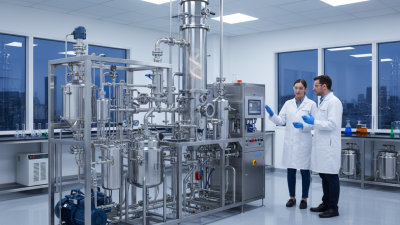
A glass wiped film evaporator is a specialized device used for the separation of liquid mixtures. It operates under reduced pressure, making it effective for materials that may decompose at higher temperatures. Transparency is one of its significant features, allowing operators to observe the process closely.
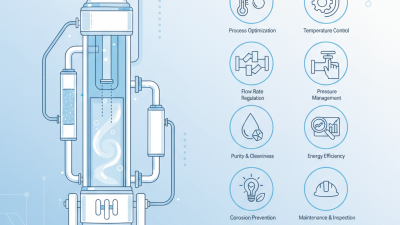
The working principle involves a thin film of liquid being evenly distributed on a heated glass surface. Mechanical wipers or scrapers help maintain this film, ensuring even evaporation. As the liquid layer moves across the surface, the thinness maximizes heat transfer efficiency. Vapors rise and can be collected, while concentrated liquid moves downward.
While it sounds straightforward, several challenges can arise. Maintaining optimal temperature is crucial; too high can cause degradation. Often, adjustments must be made in real-time. Moreover, the ability to see the process helps but can also distract. Operators sometimes overlook minor changes that could affect output quality. Understanding these dynamics is essential for effective operation in various applications.
Principle of Operation for Glass Wiped Film Evaporators
Glass wiped film evaporators are unique tools used in various industries. They operate based on the principle of creating a thin film of liquid on a glass surface. This setup enhances heat transfer efficiency. The thin film facilitates rapid evaporation, which is essential for the separation of volatile compounds from non-volatile ones.
The operation involves a rotating wiper mechanism. This wiper keeps the liquid evenly distributed on the glass surface. According to industry reports, the evaporation efficiency can reach as high as 95%. However, achieving optimal results depends on consistent maintenance and careful monitoring. Thermal gradients must also be managed effectively. Even slight variations can lead to lower performance.
Many users find it challenging to maintain the ideal operating conditions. Fluctuations in temperature and pressure directly impact efficiency. Regular calibration is necessary to avoid loss in output quality. Reports show that improper adjustments can lead to a 15% decrease in performance. Users often overlook the need for routine checks. This oversight can lead to unnecessary downtimes and increased operational costs.
Performance Comparison of Different Evaporator Types
This bar chart illustrates the efficiency of various types of evaporators based on their thermal performance (in kW) and operational capacity (in L/h). The data shows how glass wiped film evaporators compare with other common evaporator types.
Key Components of a Glass Wiped Film Evaporator
A glass wiped film evaporator is a unique apparatus. It utilizes thin film technology to separate components in liquids. This device is particularly valuable in distilling heat-sensitive materials. But what makes it work effectively?
The key components of a glass wiped film evaporator include a heating jacket, a wiper system, and a collection pot. The heating jacket warms the liquid to the desired temperature. Proper heating is critical, yet controlling it can be challenging. Too high a temperature may degrade sensitive compounds.
The wiper system spreads the liquid evenly across the evaporator's walls. It consists of a rotating wiper blade or a series of blades. These blades ensure a uniform thin film, which enhances evaporation rates. However, the design can lead to pooling if not properly calibrated. The collection pot captures the evaporated material. It’s essential that this component remains free of impurities. Stray debris can ruin the purity of the final product. Finding the right balance in all components can often require several trials and adjustments.
Applications of Glass Wiped Film Evaporators in Industry
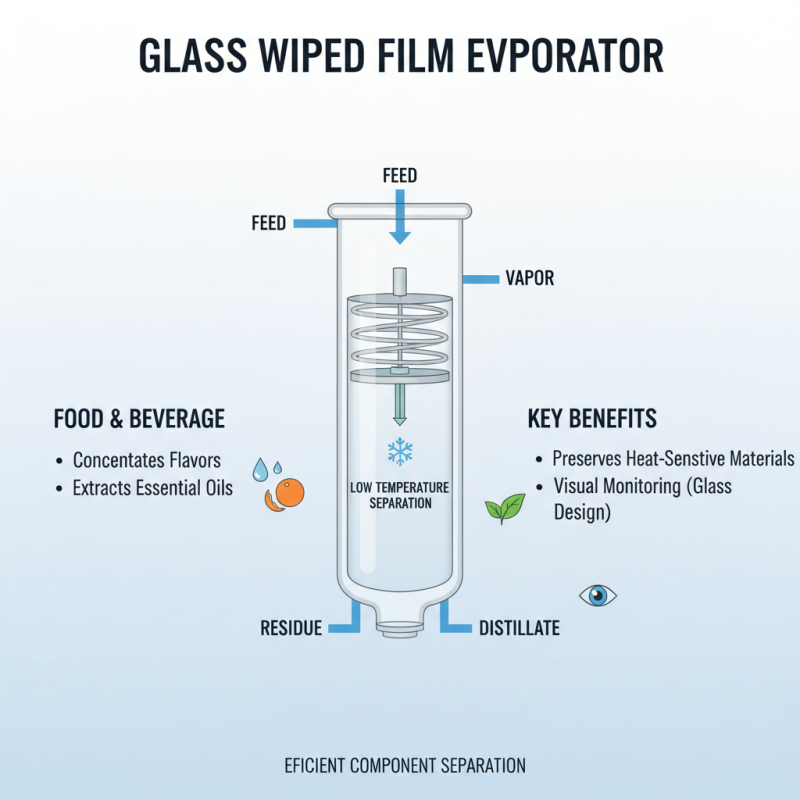
Glass wiped film evaporators are essential tools in various industries for their efficiency in separating components. They are often used in the food and beverage sector. These evaporators help concentrate flavors and extract essential oils. They operate at low temperatures, preserving the integrity of heat-sensitive materials. The design features a glass tube that allows for easy monitoring.
Pharmaceuticals also benefit from glass wiped film evaporators. These systems enable the separation of solvents from active compounds. This process is crucial in creating high-purity products. The precise control of evaporation rates ensures consistency, but it can be challenging to maintain. Operators need to carefully monitor the temperature and flow rates to avoid issues.
While glass wiped film evaporators offer many advantages, there are limitations. They can be expensive to install and maintain. Moreover, scaling may occur inside the glass tube, leading to inefficiencies. Regular cleaning and inspection are important, yet often overlooked. Balancing cost with performance can be a tricky task for manufacturers.
Advantages of Using Glass Wiped Film Evaporators
Glass wiped film evaporators are gaining popularity in various industries. They offer several advantages that make them appealing for thermal separation processes. These machines use a thin film of liquid on a heated surface, allowing efficient evaporation and concentration of solutions.
One major benefit is their efficiency. The thin film allows for a larger surface area, facilitating faster evaporation. This means products can be concentrated more quickly. Moreover, the glass construction allows for better visibility during the process. Operators can monitor reactions in real time, ensuring optimal conditions.
Another advantage is the versatility of these evaporators. They can handle a wide range of materials, from viscous liquids to delicate solutions. However, not every material performs equally. Some might cause fouling, necessitating more frequent cleaning. This can be a downside. Despite that, the benefits often outweigh the challenges, making glass wiped film evaporators a valuable tool in modern processing.
What is a glass wiped film evaporator and how does it work? - Advantages of Using Glass Wiped Film Evaporators
| Feature |
Description |
| Operating Principle |
Uses a thin film technique where the liquid is uniformly spread over a heated surface. |
| Material |
Typically made from high-quality glass to ensure visibility and easy observation. |
| Efficiency |
Highly efficient in separating volatile components from mixtures. |
| Temperature Range |
Operates effectively at a wide range of temperatures. |
| Applications |
Used in pharmaceuticals, food processing, and petrochemical industries. |
| Advantages |
Offers high purity and recovery rates, along with easy cleaning and maintenance. |