How to Choose Automatic Can Seamers for Your Business?
Choosing Automatic Can Seamers is not simply a machinery decision. It affects product safety, line speed, labor use, and long-term operating costs. A seamer sits at the point where a filled can becomes a dependable package. Its rollers must form a consistent double seam, even when production runs for many hours.
Industry data supports careful planning. PMMI’s 2024 State of the Industry report identifies labor shortages, automation, and production flexibility as major packaging priorities. Smithers’ report, The Future of Metal Packaging to 2028, also highlights metal’s strong recycling profile and continuing demand in food and beverage applications. Robert Budway, president of the Can Manufacturers Institute, stated, “Metal cans are infinitely recyclable.” That sustainability advantage matters, but poor seam control can quickly weaken the business case.
Buyers should examine more than advertised cans per minute. Ask for seam inspection records, changeover demonstrations, torque requirements, control-system details, and service response times. Watch the machine run. Listen for irregular roller contact. Inspect sample seams under magnification.
A neat brochure is not enough.
Container diameter, lid design, coating type, fill temperature, and product viscosity can change seam performance. The best Automatic Can Seamers match the complete line, not just the container size. This is where experience matters. A lower purchase price may hide expensive adjustments, rejected cans, or difficult maintenance.
There is no perfect machine for every plant. That is the uncomfortable part. A reliable choice comes from verified trials, measurable seam quality, documented support, and honest attention to future production needs.
Understanding Automatic Can Seamers and Their Main Functions
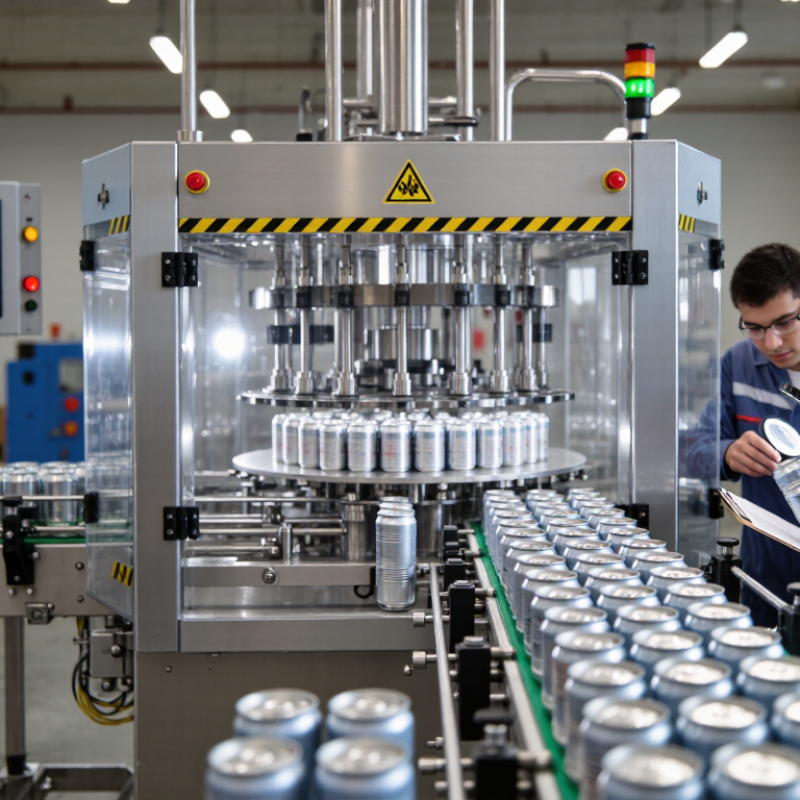
Choosing an automatic can seamer begins with understanding its main functions. The machine aligns each can, places the lid, and forms a double seam through controlled pressure and rotation. Its purpose is simple: create a consistent, hermetic closure at production speed.
Automatic models usually combine lid feeding, can indexing, seaming heads, discharge conveyors, and fault detection. Sensors can identify missing lids, tilted cans, or feeding interruptions. Some systems also record operating data for quality reviews. These features matter because a small seam defect may cause leakage, oxidation, or shortened shelf life.
PMMI’s 2023 State of the Industry report valued U.S. packaging machinery shipments at about 10.2 billion dollars in 2022. It also projected continued annual growth through 2027, showing why automation remains important for manufacturers. However, speed should not be the only purchasing measure. A 300-can-per-minute machine is unsuitable if your containers vary widely.
Start with can diameter, height, metal type, lid design, and product viscosity. Ask suppliers for seam-testing procedures, changeover time, and inspection records. FDA guidance for low-acid canned foods emphasizes process control and container-closure integrity, so seam inspection should be routine, not occasional. I would also test real containers before approval. Catalog figures can look impressive. Factory conditions are less polite.
Assessing Your Production Capacity and Can Seaming Requirements
Choosing an automatic can seamer starts with your real production capacity, not the machine’s advertised peak speed. Measure cans per minute, operating hours, changeover frequency, and expected downtime. Peak speed is not output. A line rated for 300 cans per minute may deliver less after cleaning, adjustments, and minor stoppages. Build your estimate from actual shift records, including rejected cans and maintenance delays. Small errors matter.
Your container size, metal thickness, lid design, and product type also shape the seaming requirement. Confirm the can diameter range and whether one machine can handle your planned formats. Ask for seam samples using your own cans and ends. Inspect seam thickness, tightness, overlap, and visual consistency through qualified testing methods. A neat spreadsheet can still mislead. I have seen capacity plans fail because changeovers were treated as invisible time.
Tips: Compare expected output with practical output, not the brochure figure. Keep at least some capacity for seasonal demand and future products. Check how quickly operators can adjust tooling without compromising seam quality. Record test results and inspection settings for every can format. If your product is sensitive to oxygen or leakage, involve a packaging specialist before purchase. The best choice is the machine that matches your daily rhythm, not merely the fastest machine in a demonstration.
Evaluating Material Compatibility, Safety, and Operational Efficiency
Choosing an automatic can seamer starts with the container, not the machine catalogue. Steel and aluminum cans differ in stiffness, coating behavior, and flange geometry. Request trials using your exact can diameter, lid profile, coating, and product temperature. A seam may look clean yet fail under pressure testing. That is a costly surprise.
Material compatibility also affects corrosion and hygiene. Product-contact surfaces should resist moisture, acids, salts, and cleaning chemicals. Confirm the approved material grades and inspect seals after repeated washdowns. The U.S. Food and Drug Administration’s food-contact guidance emphasizes suitable materials and controlled manufacturing conditions. I would also verify seam integrity through teardown measurements, vacuum checks, and periodic leak tests. One perfect sample proves little.
Safety deserves equal attention. Guards, interlocks, emergency stops, and safe access should follow a documented risk assessment under ISO 12100 principles. The U.S. Bureau of Labor Statistics recorded a 2023 total recordable incident rate of 3.0 cases per 100 full-time workers in manufacturing. Automation reduces handling, but it does not remove risk. PMMI’s 2024 State of the Industry reporting also identifies labor availability and equipment integration as continuing packaging concerns. Choose controls that operators can understand quickly. Measure changeover time, seam rejects, compressed-air use, and unplanned stops. Faster is not always better. A poorly tuned seamer can waste cans quietly for hours.
Selecting a Reliable Supplier and Planning Long-Term Maintenance
Choosing an automatic can seamer requires more than comparing speed and purchase price. Supplier reliability shapes production for years. Request a factory acceptance test using your actual can sizes, lids, and product conditions. Check seam inspection records, adjustment procedures, and operator training materials. Ask how quickly technicians respond during nights or holidays. Silence is a warning sign.
Long-term maintenance should be discussed before signing. A dependable supplier provides exploded drawings, spare-parts lists, lubrication points, and recommended replacement intervals. Critical parts should have clear lead times and local availability. The U.S. Department of Energy’s Operations & Maintenance Best Practices Guide reports that preventive maintenance can reduce maintenance costs by 12% to 18%. That matters when a seamer stops a filling line.
Plan maintenance around real operating conditions. Record seam thickness, pressure, speed, vibration, and changeover frequency. McKinsey’s “Predictive Maintenance 4.0” report estimates that predictive programs can reduce downtime by 30% to 50%. However, sensors cannot repair poor training. I would also test cleaning access and inspection visibility before approval. A machine may look efficient during a demonstration, yet feel impractical beside a wet production line. Review the service contract annually, and challenge assumptions when parts fail sooner than expected. Reliability is measured during difficult weeks, not showroom hours.