Top Tips for Choosing the Right WFE Evaporator?
Choosing the right WFE evaporator is crucial for various industrial applications. A suitable evaporator can significantly improve efficiency and productivity. However, making the right choice can be challenging. There are many factors to consider.
Navigating through the technical specifications of WFE evaporators can be overwhelming. You may find different designs and features that claim to outperform others. But how do you know which one fits your needs best? Understanding your specific requirements is essential for making an informed decision.
An effective WFE evaporator must align with your operational goals. Consider aspects like capacity, energy efficiency, and maintenance needs. Poor choices can lead to operational inefficiencies and increased costs. Take your time to evaluate each option carefully. Reflection and research will ensure that you select the best evaporator for your processes.
Understanding WFE Evaporators and Their Applications
WFE evaporators play a vital role in various industrial applications, notably in the fields of wastewater treatment, food processing, and chemical manufacturing. Understanding how these evaporators function is essential for selecting the right model. WFE stands for "wiped film evaporator," which means it uses a thin film of liquid to maximize surface area for efficient evaporation. This mechanism is crucial for concentrating liquids or separating mixtures effectively.
In selecting the appropriate WFE evaporator, consider factors like the type of substance being processed and the desired evaporation rates. For example, sticky materials may require specific scraping mechanisms to prevent blockages.
It’s also important to evaluate the heating methods available. Steam heating may suit some applications, while others might benefit from electric heat. Each choice influences efficiency and energy consumption.
Installation requirements should not be overlooked. Some systems need more space or specific environmental conditions. The cost is another factor that demands careful consideration. A cheaper option may not always be the most reliable in the long term.
Researching and consulting with industry experts can provide insights, but market dynamics are always shifting. Balancing these various elements can be challenging, and there's no one-size-fits-all solution.
Key Factors to Consider When Selecting a WFE Evaporator
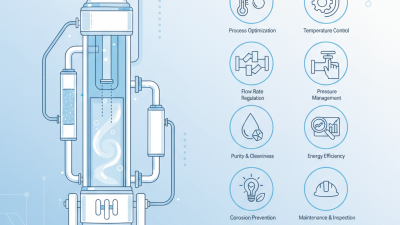
When selecting a WFE evaporator, several key factors must be considered. Understanding your process requirements is crucial. Different applications require varying temperatures, pressures, and flow rates. Evaluating these parameters helps narrow down suitable options.
Material compatibility is also essential. The evaporator's materials should withstand the specific chemicals being processed. Corrosion resistance can prevent costly failures. Consider the maintenance needs too. Some designs may require frequent upkeep, impacting long-term efficiency.
Space constraints shouldn't be overlooked. Ensure the evaporator fits within your existing layout. Sometimes, additional modifications may be necessary. Lastly, factor in energy consumption. An efficient evaporator can lower operational costs significantly. However, balancing upfront costs with long-term savings demands careful thought. Evaluating all these factors systematically can lead to better selections.
Comparing Different Types of WFE Evaporators
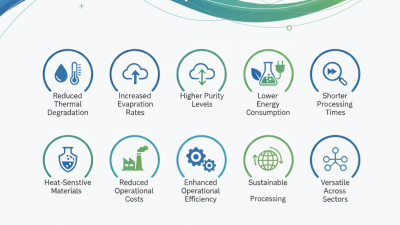
When evaluating different types of WFE (Wiped Film Evaporators), several factors should be considered. Each type has unique efficiencies and applications. A recent industry report revealed that thin film technology can achieve evaporation rates of up to 98%, making it ideal for heat-sensitive materials. In contrast, traditional falling film evaporators often reach 80% efficiency.
The choice may also depend on maintenance needs. Some WFE models require more frequent cleaning, impacting operational downtime. Understanding these differences is crucial. For example, while a more efficient unit may be appealing, its maintenance requirements could strain resources.
Another aspect to reflect on is cost-effectiveness. Investing in advanced models can yield better results, but initial costs are higher. It is imperative to analyze long-term benefits versus upfront expenses. Different industries prioritize distinct metrics, so aligning the evaporator's capabilities with specific operational needs is essential. Achieving optimal performance requires thoughtful consideration and regular assessment of evolving technologies.
Evaluating Efficiency and Performance Metrics
When evaluating efficiency and performance metrics for WFE (Wiped Film Evaporators), several factors play a crucial role. Energy efficiency remains a top priority. Industry benchmarks suggest that a high-quality WFE should ideally operate with a thermal efficiency of over 80%. This metric directly impacts operational costs. An evaporator that can recover more energy leads to significant savings.
Another critical aspect is the evaporation rate. Reports indicate that a well-designed WFE can achieve evaporation rates of more than 5,000 liters per hour. This performance is vital in high-demand applications. However, not all systems can meet these metrics consistently. It is essential to consider the design aspects, such as surface area and heat transfer efficiency, which influence overall performance.
Additionally, operational flexibility must be evaluated. Some evaporators may struggle to maintain efficiency under varying feed conditions. Operators should analyze case studies where specific evaporators were deployed to identify potential operational issues. Failing to account for these nuances can lead to inefficiencies that undermine system effectiveness.
Efficiency Comparison of WFE Evaporators
Assessing Cost-Benefit Analysis of WFE Evaporators
When assessing the cost-benefit analysis of WFE (Wiped Film Evaporators), one must consider various factors. The initial capital investment can be substantial, often ranging between $50,000 to $300,000 depending on capacity and specifications. However, long-term savings on operating costs may offset this upfront expense. Studies suggest that WFE systems can reduce energy consumption by as much as 30%. This is vital in industries where energy costs constitute a significant portion of the operating budget.
Operational efficiency is another critical aspect. WFE evaporators often achieve higher throughput and better product quality than traditional systems. A report by the American Institute of Chemical Engineers indicates that processing times can be decreased by a third. Yet, it’s essential to evaluate the maintenance requirements of WFE systems. Regular maintenance is necessary. Failing to address this can lead to increased downtime and repair costs. Companies must weigh these factors against their production goals.
Data from industry surveys reveal that about 72% of firms using WFE technology report improved yield rates. Nevertheless, this does not mean WFE evaporators are suitable for all applications. Certain products may not benefit from this technology as anticipated. Each operation needs a tailored analysis. Careful consideration of the balance between cost and efficiency is crucial for decision-making.
Top Tips for Choosing the Right WFE Evaporator - Assessing Cost-Benefit Analysis of WFE Evaporators
| Criteria |
Description |
Cost Consideration ($) |
Benefits |
| Efficiency |
Energy consumption and output ratio |
5000 |
Reduced operational cost |
| Maintenance |
Frequency and cost of maintenance |
2000 |
Lower downtime |
| Installation |
Setup requirements and complexity |
3000 |
Quick start-up |
| Capacity |
Maximum output capabilities |
4000 |
Increased production |
| Material Quality |
Durability and resistance to corrosion |
3500 |
Longer lifespan |