
Employment Application Apply
Chemical Anchor systems are becoming essential for reliable fastening in concrete, masonry, and demanding renovation projects. Global buyers now compare more than resin price. They examine bond strength, curing behavior, installation temperature, approvals, and technical support. A small cartridge may secure a steel handrail, façade bracket, or heavy machine base, yet its performance depends on drilling, cleaning, mixing, and curing.
Industry evidence supports this broader view. Grand View Research and MarketsandMarkets both identify construction chemicals as a growing global market, driven by infrastructure renewal, urban construction, and repair work. Their reports also show regional differences in demand, raw-material costs, and compliance expectations. However, market estimates vary. Buyers should question impressive growth figures without checking definitions, product categories, and publication dates. That is an imperfect step, but a necessary one.
Rolf Eligehausen, a leading researcher in post-installed anchoring, is often associated with this practical principle: “The installation process is part of the anchor.” It explains why technical approval matters. EN 1992-4, ACI 355.4, and ICC-ES AC308 provide important references for evaluating bonded anchor systems. Still, certification does not replace competent installation. This guide reviews China’s top 10 Chemical Anchor manufacturers for global buyers, focusing on production experience, testing capability, documentation, customization, and export reliability. Product brochures can look similar. Factory discipline rarely does.
Chemical anchors bond threaded rods or reinforcing bars to concrete, masonry, and sometimes stone. Installers drill a hole, clean it carefully, inject resin, and insert the steel element. The cured compound transfers tensile and shear loads through adhesion, rather than relying on expansion pressure. This makes chemical anchoring useful near edges, in narrow members, and for heavy structural connections.
Market demand reflects broader construction activity. Grand View Research estimated the global construction adhesives market at about USD 11 billion in 2023, with continued growth expected through 2030. Chemical anchors remain a specialized segment, but their use is expanding in bridges, industrial equipment, façade systems, and retrofit work. Real performance depends on more than resin strength. Hole cleaning, embedment depth, curing temperature, moisture, and installer discipline can change the result dramatically. Small mistakes matter.
Key evaluation points include characteristic bond strength, crack resistance, creep behavior, fire performance, seismic suitability, and service-temperature limits. European assessment documents under EAD 330499 and design guidance such as EN 1992-4 help engineers compare tested systems. Buyers should request verified load data for cracked concrete, sustained loads, and wet holes. “Strongest” is rarely a complete answer. A fast-curing product may sacrifice working time, while a high-capacity system may demand stricter preparation. That trade-off deserves closer review.
China Top 10 Chemical Anchor Manufacturers for Global Buyers
How China’s Top Chemical Anchor Manufacturers Are Evaluated
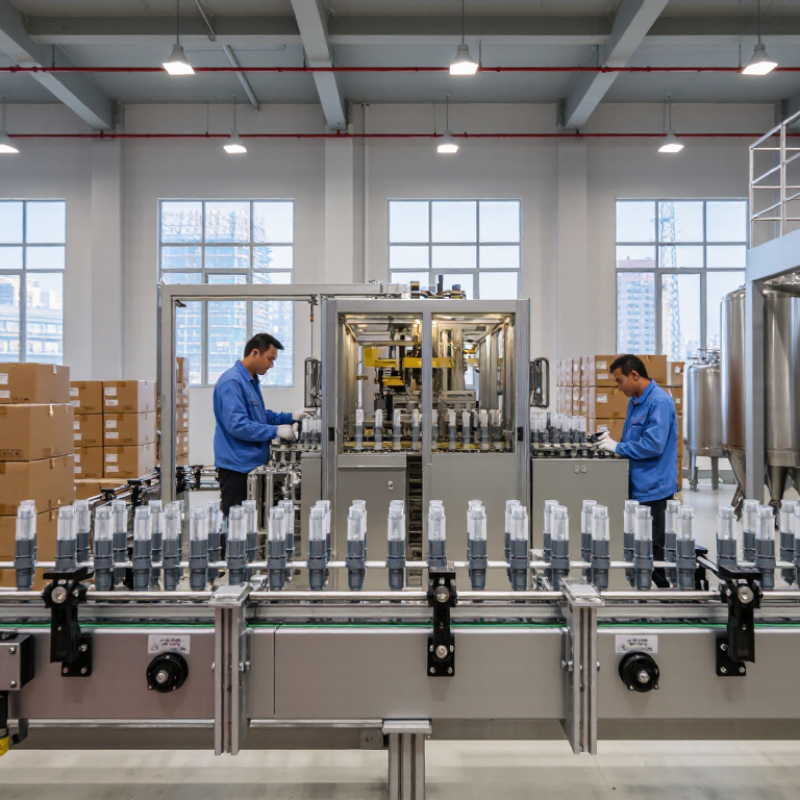
Global buyers should evaluate chemical anchor manufacturers through evidence, not polished catalog language. Real manufacturing experience appears in controlled mixing, cartridge filling, curing data, and installation support. Ask for batch records, resin specifications, shelf-life controls, and documented pull-out tests. Factory visits can reveal practical details, such as clean dispensing areas and calibrated testing equipment. Small details matter.
Technical competence requires more than a high load rating. Review test methods, concrete grades, embedment depths, temperature ranges, and failure modes. Results from cracked concrete may not represent performance in masonry or damp holes. Reliable producers explain these limits clearly. That honesty is important. Independent laboratory reports, quality certificates, and traceable corrective actions strengthen credibility. However, certificates alone do not prove consistent production. Samples from different batches should receive comparable checks before approval.
Commercial reliability also affects the evaluation. Buyers should examine lead times, packaging protection, technical response speed, and export documentation. Clear installation instructions should cover hole cleaning, mixing, curing, and torque control. During a site trial, record ambient temperature and actual setting time. A failed trial is useful. It may expose weak training, unsuitable substrates, or an overlooked storage problem. One audit cannot predict every shipment, so periodic sampling and field feedback remain necessary.
An anonymized, standards-based evaluation framework for comparing chemical anchor manufacturers without displaying company or brand names.
| No. | Evaluation Dimension | What Global Buyers Check | Recognized Reference or Evidence | Suggested Weight | Strong Manufacturer Benchmark |
|---|---|---|---|---|---|
| 01 | Product Safety and Chemical Compliance | Whether resin components, hardeners, labels, safety data sheets, and transport documents comply with the target-market requirements. | SDS aligned with GHS; REACH and CLP review where applicable; restricted-substance declarations; batch traceability. | 15% | Complete technical and safety documentation is available before purchase, with controlled revision records and identifiable production batches. |
| 02 | Structural Performance Validation | Verified tensile, shear, sustained-load, cracked-concrete, and edge-distance performance for the intended applications. | Independent test reports; ETA under EAD 330499 where applicable; ICC-ES AC308 evaluation where applicable; laboratory method statements. | 18% | Performance data is supported by traceable testing and clearly states concrete strength, embedment depth, temperature, curing time, and installation conditions. |
| 03 | Quality Management System | Consistency of raw-material control, production inspection, nonconformance handling, corrective action, and document control. | Valid ISO 9001 certification; internal audit records; incoming-material inspection; corrective-action records. | 12% | The quality system is certified, actively maintained, and supported by inspection records that can be matched to production batches. |
| 04 | Material and Formula Consistency | Stability of resin viscosity, mixing ratio, curing behavior, bond strength, and shelf life across different batches. | Certificate of analysis; batch test results; retained-sample program; defined acceptance limits for key properties. | 10% | Each batch is released against documented specifications, and the manufacturer can investigate quality concerns using retained samples and production records. |
| 05 | Installation Instructions and Technical Support | Clarity of hole cleaning, mixing, dispensing, curing, temperature, and load-application instructions. | Technical data sheet; installation manual; cleaning requirements; curing-time table; installer training materials. | 10% | Instructions are written in clear technical English, include job-site limitations, and provide responsive support for design and installation questions. |
| 06 | Packaging and Cartridge Compatibility | Compatibility with standard dispensing tools, nozzle systems, cartridge formats, storage conditions, and transport requirements. | Packaging specifications; dispensing-ratio information; nozzle availability; drop and leakage checks; storage instructions. | 7% | Cartridges are securely sealed, clearly marked with lot and expiry information, and compatible with commonly used manual or pneumatic dispensers. |
| 07 | Production Capacity and Delivery Reliability | Ability to maintain supply during project peaks, manage minimum order quantities, and meet agreed shipment schedules. | Capacity statement; production lead-time records; on-time delivery data; export packing and logistics procedures. | 8% | The supplier provides realistic lead times, communicates capacity constraints early, and maintains documented shipment and order-tracking processes. |
| 08 | Environmental and Durability Performance | Resistance to moisture, temperature variation, chemical exposure, freeze-thaw conditions, and long-term service environments. | Durability test reports; service-temperature limits; EN 1504-6 information where relevant; project-specific exposure data. | 8% | The manufacturer provides defined environmental limitations and supporting durability evidence instead of relying only on general marketing claims. |
| 09 | Customization and Private-Label Capability | Ability to support different cartridge sizes, packaging languages, technical documents, colors, and market-specific requirements. | Approved artwork process; sample approval records; packaging specifications; change-control procedure. | 5% | Customization is controlled through formal approval procedures without compromising formula consistency, safety information, or traceability. |
| 10 | Commercial Transparency and After-Sales Service | Clarity of quotation, warranty terms, complaint handling, replacement policy, technical response time, and total delivered cost. | Formal quotation; warranty statement; complaint-response procedure; service-level records; transparent Incoterms and payment terms. | 7% | Commercial terms are documented, technical complaints are investigated systematically, and corrective actions are communicated within an agreed timeframe. |
This profile examines ten Chinese chemical anchor manufacturers serving international construction and infrastructure buyers. Their product ranges commonly include injectable resin anchors, threaded-rod systems, rebar anchoring solutions, and mixing accessories. The strongest profiles show clear control over resin formulation, cartridge filling, nozzle design, and batch traceability.
Several manufacturers emphasize automated production and laboratory testing. Their technical teams may evaluate pull-out strength, curing time, temperature performance, and shelf stability. Buyers should request current test reports, technical data sheets, and samples from the same production batch. Factory visits can also reveal storage conditions, calibration practices, and packaging discipline. Small details matter.
Export experience differs across the ten profiles. Some manufacturers provide multilingual documents and application guidance, while others rely heavily on distributors. This difference can affect installation quality after delivery. Experienced suppliers usually explain hole cleaning, embedment depth, curing conditions, and load limitations in practical language. They should not promise identical performance in every concrete condition.
No profile is flawless. A strong catalog does not replace independent verification. Buyers should compare documented test methods, quality controls, response times, and after-sales support before choosing a supplier. Weather resistance, fire performance, and local approval requirements may need separate confirmation.
One overlooked point is worker training. Even a well-formulated anchor can fail when drilling or cleaning procedures are ignored.
China Top 10 Chemical Anchor Manufacturers for Global Buyers
When comparing China’s top 10 chemical anchor manufacturers, resin chemistry deserves close attention. Epoxy offers strong bonding and longer working time. Vinyl ester cures faster and performs well in damp conditions. Polyester is often more economical for lighter, non-critical installations. The choice should match concrete strength, temperature, moisture, and load direction.
Applications reveal practical differences. Some suppliers support cracked and non-cracked concrete anchoring, rebar connections, façade supports, machinery bases, and overhead installations. Ask for test data covering tension, shear, seismic loads, and fire exposure. Standards matter. Check documents against EN 1504-6, relevant ETA requirements, ICC-ES reports, or applicable ASTM methods. Certificates alone are not enough. Traceability matters too.
Customization can include cartridge volumes, mixing nozzles, curing speed, label languages, packaging, and private technical documents. A reliable manufacturer should provide SDS files, installation instructions, batch records, and independent laboratory reports. Confirm shelf life under actual warehouse temperatures. Small details matter. A neat comparison table can still mislead when testing conditions differ. I have seen products perform differently after poor hole cleaning or incorrect nozzle use. Buyers should request sample trials and verify pull-out performance on their own concrete. Results may vary. That part is easy to overlook.
Product comparison by resin chemistry, typical applications, curing-time range, standards, and customization considerations.
The chart presents indicative curing-time bands at approximately 20°C for common chemical anchor resin systems. Actual performance depends on the formulation, hole condition, anchor diameter, substrate temperature, and technical approval. Buyers should verify the product technical data sheet and applicable approvals, such as EN 1992-4, EN 1504-6, ASTM E488/E488M, and ACI 355.4.
Selecting a reliable chemical anchor manufacturer requires more than comparing unit prices. Global buyers should verify production experience, technical capability, and export readiness. Request product specifications, safety data sheets, test reports, and installation guidance before placing an order. Check whether the factory controls resin mixing, cartridge filling, curing tests, and final packaging.
A serious manufacturer should provide batch numbers and traceable quality records. Ask how raw materials are inspected and how failed batches are handled. Independent laboratory testing can confirm tensile strength, curing time, and performance under different temperatures. Factory audits also reveal practical details, such as clean storage areas, calibrated equipment, and trained workers. Certificates alone are not enough. Sometimes, paperwork looks stronger than daily production.
Tips: Start with a small trial order. Test samples on the concrete type used in your projects. Confirm shelf life, delivery conditions, packaging strength, and replacement procedures in writing. A video tour helps, but an onsite audit is more reliable. Keep communication records and request clear answers from technical staff, not only sales representatives.
Buyers should also examine the manufacturer’s response to problems. Do they investigate complaints with evidence? Can they explain a delayed shipment or inconsistent curing result? Reliable suppliers usually accept reasonable inspections and discuss corrective actions openly. However, no supplier is perfect. I would keep a second qualified source, because one overlooked dependency can interrupt an entire construction schedule.