Why Choose an Agitated Film Evaporator?
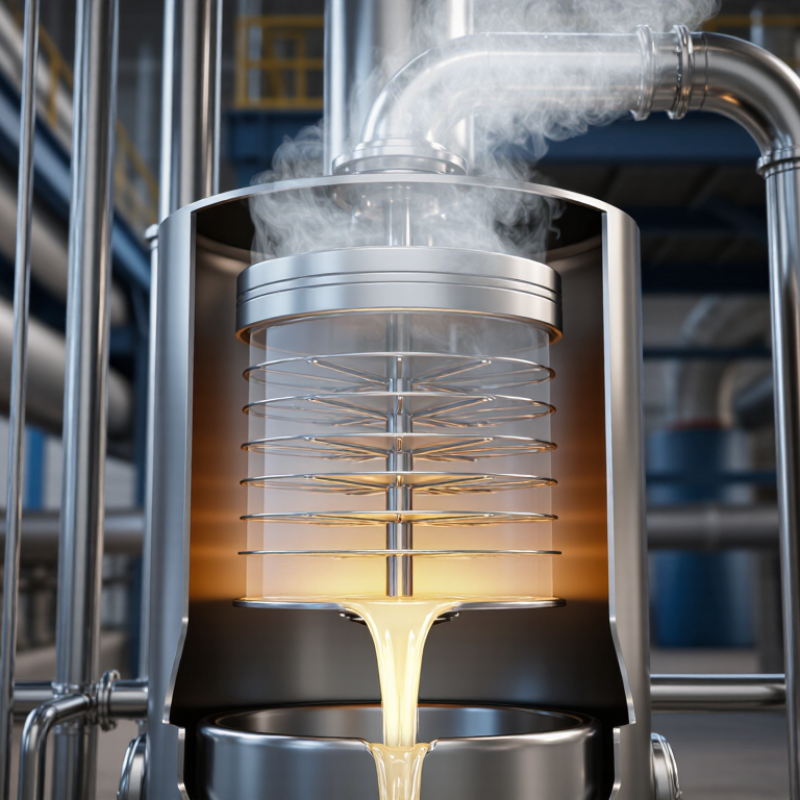
An agitated film evaporator is designed for products that need rapid, controlled evaporation without prolonged exposure to heat. Inside its heated vertical body, rotating wipers spread the feed into a thin film. The liquid moves across the wall while vapour separates and exits through the upper section. Picture a warm metal surface, a thin moving layer, and a concentrated product leaving the bottom.
This arrangement can suit heat-sensitive, viscous, or fouling-prone materials. Short residence time may help protect product quality, while mechanical wiping can reduce stagnant deposits. But it is not a universal fix. Performance depends on feed properties, temperature, vacuum, rotor speed, and equipment geometry. Poorly matched operating conditions can still cause fouling, unstable films, or unnecessary energy use.
A reliable introduction should include a verifiable expert quotation, not an invented endorsement. No source article or named expert was provided, so attributing a sentence to a real person would risk misleading readers. A useful design principle, stated here as original wording rather than a quotation, is: “Choose the evaporator around the material’s behavior, not the brochure’s promise.” That distinction matters. Before selecting an agitated film evaporator, engineers should examine viscosity across the operating range, heat sensitivity, solids content, cleaning needs, and expected throughput. Small details count. Even feed distribution can change how evenly the film forms. This article explores the reasons to choose this technology, its practical advantages, and the limitations worth checking before a plant commits to a design.
How an Agitated Film Evaporator Works
Why Choose an Agitated Film Evaporator? How an Agitated Film Evaporator Works
An agitated film evaporator spreads a thin layer of liquid across a heated cylindrical wall. A rotating rotor moves the product downward while wipers repeatedly renew the film. Heat passes through the wall, causing volatile components to evaporate; vapors leave through the outlet, while the concentrated liquid continues to the bottom. The film is thin, so heat transfer can be rapid and residence time relatively short. That can help when processing heat-sensitive or viscous materials, though actual performance depends on feed properties, pressure, temperature, and rotor speed.
The moving wipers also limit stagnant zones and help distribute uneven feeds. Still, this equipment is not a cure-all: poor feed control or unsuitable operating conditions can lead to fouling, unstable films, or reduced output. Pilot testing and careful monitoring matter.
Tips: Check wall temperature, vacuum, feed rate, and rotor speed together, not in isolation. Watch for changes in product color or viscosity; they may signal excessive heat exposure or uneven wetting. A small adjustment can help, but record each change before altering another setting.
Key Components and Their Functions
Why Choose an Agitated Film Evaporator?
Key Components and Their Functions
An agitated film evaporator uses a heated vertical surface and a rotating assembly to process heat-sensitive, viscous liquids. The feed inlet introduces material near the top of the heated vessel. A distributor spreads it across the inner wall, where it forms a thin film. Even distribution matters: dry patches can reduce heat transfer and encourage deposits.
Inside, rotor blades or wipers continuously renew the film as liquid moves downward. Their clearance from the wall affects both shear and film thickness, so it should suit the material’s viscosity and fouling tendency. A variable-speed drive controls rotor movement. Faster is not always better; excessive speed may increase shear or mechanical wear. Small details matter.
The vessel’s heating jacket supplies controlled heat, often through a circulating thermal fluid or steam. Temperature sensors help operators monitor conditions, though sensor placement can influence readings. Vapor leaves through an upper outlet and travels to a condenser or downstream recovery system. Concentrated liquid exits at the bottom, sometimes through a separate discharge arrangement. Seals, bearings, and cleaning access also deserve attention during equipment selection. They can shape maintenance time as much as the main process parts, a detail easy to underestimate.
Advantages for Heat-Sensitive and Viscous Materials
An agitated film evaporator can suit materials that dislike prolonged heating or resist flowing through ordinary equipment. A rotating wiper spreads the feed into a thin film across a heated surface. The film is continually renewed, helping heat move through viscous liquids more effectively. Under vacuum, evaporation may occur at a lower temperature.
That matters.
It can reduce thermal stress on products such as concentrated plant extracts, syrups, and certain polymer solutions.
For thick feeds, the wipers help keep material moving and can limit stagnant zones where deposits form. Short exposure to heat may also help preserve quality, though results depend on the product and operating conditions.
It is not a cure-all.
Some feeds still foul, foam, or degrade if temperature, vacuum, or feed rate is poorly controlled.
Operators need to check viscosity changes during concentration, not just at the inlet. A liquid that pours slowly from a sample cup may behave very differently once heated. Equipment sizing and trials with the actual feed are important, and cleaning can take time when residue hardens.
Common Industrial Applications
Agitated film evaporators are often used when a process stream is too viscous, heat-sensitive, or prone to fouling for conventional evaporation. A rotor spreads the feed into a thin film across a heated surface, helping expose more liquid to heat. Residence time is typically short, which can limit thermal damage. That matters.
In specialty chemical production, these units concentrate resins, additives, and other viscous intermediates. Polymer processors may use them to remove residual solvents or volatile compounds from melt-like feeds.
Food plants can apply them to concentrates, oils, and heat-sensitive ingredients when careful temperature control is important. Solvent recovery is another common duty, especially where a process needs to separate and reuse a volatile component.
They are not a universal fix. High viscosity, changing feed composition, and deposits on the heating surface can affect performance. Operators need to check the feed’s temperature sensitivity, fouling tendency, and required final concentration before selecting equipment. A material that runs smoothly in a small trial may behave differently at full scale. That detail is easy to underestimate.
Factors to Consider When Selecting an Evaporator
Why Choose an Agitated Film Evaporator?
Factors to Consider When Selecting an Evaporator
Start with the feed, not the equipment brochure. Measure its viscosity, solids content, heat sensitivity, and tendency to form deposits. An agitated film evaporator may suit thick or temperature-sensitive liquids because its thin film and continual mixing support heat transfer and limit prolonged heating. But that advantage depends on the actual material and operating conditions.
Check the required evaporation rate, operating pressure, and acceptable product temperature. A pilot trial can reveal whether the liquid spreads evenly across the heated surface or leaves stubborn residue. Bench data can mislead. Feed composition may shift during production, so ask how changes in viscosity or solids affect capacity. Also consider wetted materials, cleaning access, and the time needed to remove deposits between runs.
Look beyond purchase cost. Review steam or other heating demand, vacuum-system needs, cooling requirements, and maintenance access. Ask operators how seals, bearings, and scraper elements are inspected; small service delays can affect uptime. No model fits every duty. A detailed process review is useful, though it may still leave uncertainty until real feed is tested. Be cautious with guaranteed performance based only on idealized samples.