How Does a Falling Film Evaporator Work?

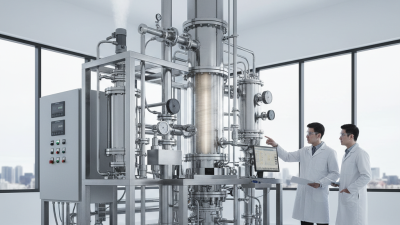
A falling film evaporator handles heat-sensitive liquids with a light touch. Feed enters near the top of a vertical tube bundle. It spreads into a thin layer along each tube’s inner wall. Gravity pulls the film downward while steam heats the tube walls from outside. The liquid warms, and some of it flashes into vapor. Brief contact matters. The product spends less time under heat than it might in a large, mixed vessel.

This is the practical principle of falling film evaporator design: create a stable, thin film and transfer heat efficiently as the liquid flows. Food-process engineering scholar R. Paul Singh’s educational work emphasizes careful control of processing conditions; a relevant takeaway, paraphrased rather than quoted, is: “Heat transfer and residence time both shape product quality.” That distinction matters. Poor distribution can leave dry patches, uneven heating, or concentrated deposits on tube walls. Operators therefore watch feed rate, temperature, pressure, and vapor flow. Small changes can shift performance.

The approach can suit dairy products, fruit concentrates, and other temperature-sensitive streams. Yet no evaporator is effortless. Viscosity changes as water leaves, and a film that once flowed smoothly may become uneven. That is easy to underestimate. This introduction explains the operating principle, key components, and practical limits behind the process.
How Does a Falling Film Evaporator Work?

Basic Structure and Operating Principle of a Falling Film Evaporator

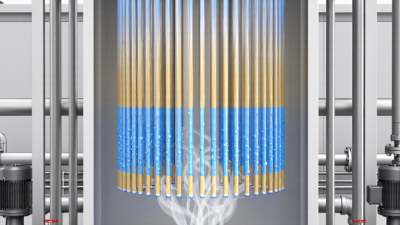
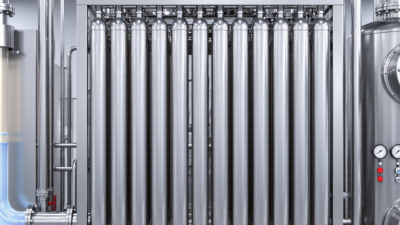
A falling film evaporator is usually built around a vertical shell containing a bundle of heated tubes. A feed distributor sits above the tubes and spreads liquid across their openings. The distributor’s job is important: uneven flow can leave some tube surfaces poorly wetted. Small details matter. Depending on the design, the liquid film travels down the inside or outside of the tubes, while a heating medium transfers heat through the tube walls.

As the feed descends in a thin layer, it absorbs heat and begins to boil. The vapor and remaining liquid then enter a separation space, where they are separated before leaving the unit. Many systems operate under vacuum, which lowers the liquid’s boiling temperature and can reduce heat exposure. This can help with heat-sensitive products, but it does not remove the need for careful temperature and flow control.

Operators monitor feed rate, pressure, temperature, and product concentration. A sudden change in pressure or flow may affect evaporation and film coverage. The theory is tidy; plant operation is less so. Deposits, foaming, or a partly blocked distributor can disrupt performance. A clear outlet reading alone may not reveal uneven wetting, so inspection and process records still matter.

How Feed Is Distributed Across the Heating Surface

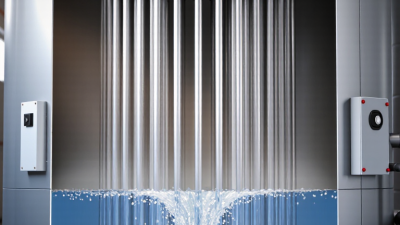
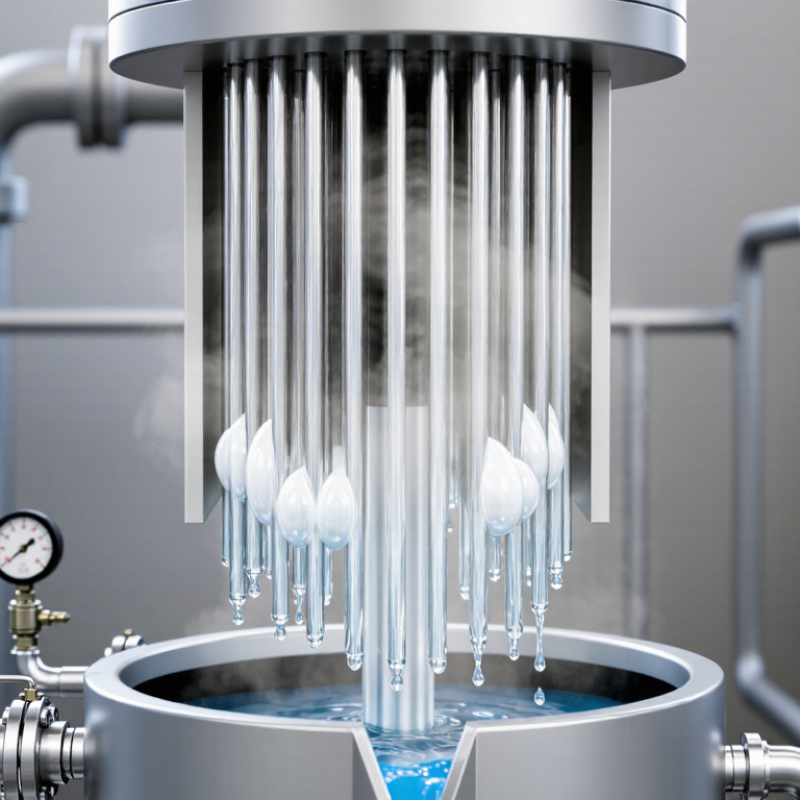
At the top of a falling-film evaporator, feed must form a continuous sheet before gravity carries it down the heated tubes. A distribution tray, perforated plate, or set of calibrated nozzles spreads the liquid across the tube entrances. The aim is consistent wetting, not simply equal-looking streams. Small leveling errors matter. A dry patch can overheat, while excess flow may thicken the film and reduce evaporation efficiency.

This distribution step matters because heat must pass through the liquid film to drive evaporation. The IAPWS-IF97 industrial formulation reports water’s latent heat at 100°C as approximately 2,257 kJ/kg; under vacuum, boiling temperature and the heat balance change. Perry’s Chemical Engineers’ Handbook identifies liquid wetting and flow regime as important factors in falling-film heat transfer. Operators therefore check feed flow, tray level, and tube coverage during commissioning, then watch for changes as viscosity rises with concentration. A clear inspection window can reveal streaks or dry sections, though it cannot show every tube. That limitation is easy to underestimate.

How Does a Falling Film Evaporator Work? — How Feed Is Distributed Across the Heating Surface

Stage or Component What Happens Distribution Requirement What Poor Distribution Can Cause Practical Check
Feed inlet Liquid feed enters the evaporator and is directed to the distributor above the heated tubes or plates. The inlet should deliver a stable feed flow without creating a strong bias toward one side of the distributor. Uneven inlet flow can overload some passages while starving others. Check feed-flow stability and inspect the inlet path for blockage, leakage, or unintended bypass.
Distributor plate, tray, or header The distributor spreads the incoming liquid across the heating surface. Depending on the design, it may use openings, channels, or overflow features. Each tube or passage should receive a reasonably even share of the liquid under the intended operating conditions. Uneven flow can leave parts of the heating surface poorly wetted and reduce effective heat transfer. Inspect distribution openings and channels for scale, solids, damage, or fouling; confirm the distributor is level where required by its design.
Entry into individual tubes Liquid enters the top of each heated tube and begins flowing downward along the inner wall as a thin film. Feed should enter the tubes cleanly and consistently rather than pooling, splashing excessively, or bypassing tube entrances. Some tubes may run dry or receive too little liquid, while others may carry excessive flow. During inspection or commissioning, compare flow behavior across tube entrances using the equipment maker’s recommended procedure.
Film formation on the heating surface Gravity carries the liquid film down the heated surface. Heat passes through the tube wall and causes part of the liquid to evaporate. The film must remain sufficiently continuous over the heated length; the required flow depends on liquid properties and equipment design. Dry patches can promote local overheating, deposits, or product degradation in heat-sensitive services. Review operating trends and product condition; investigate unexpected fouling, temperature changes, or reduced evaporation performance.
Vapor and liquid movement Generated vapor travels through the evaporator while the remaining liquid continues downward toward the outlet. The vapor and liquid paths should remain unobstructed so that vapor removal does not disrupt film flow. Restrictions or unstable operation can contribute to poor flow distribution, pressure fluctuations, or reduced capacity. Check pressure and temperature trends and verify that vapor outlets and downstream separation equipment are operating as intended.
Outlet and recirculation, if fitted Concentrated liquid leaves the heating section. Some systems return part of the liquid to maintain the required circulation or wetting rate. Any recirculation arrangement should provide the flow required by the process without causing uneven loading at the distributor. Insufficient flow can impair wetting; excessive or unstable return flow can disturb distribution and process control. Confirm outlet and recirculation flows against the process design basis and check pumps, control valves, and return lines.

Note: Distributor geometry and operating limits vary with the evaporator design, feed viscosity, solids content, and tendency to foul. Use the equipment design documents and process-specific operating instructions to establish flow and inspection criteria.

How the Liquid Film Heats and Evaporates

How Does a Falling Film Evaporator Work?

A distributor spreads incoming liquid across the tops of vertical tubes. Gravity draws it downward as a thin film along each heated wall. Steam or another heating medium transfers energy through the tube walls. The liquid warms quickly, and some molecules escape as vapor. Both vapor and concentrated liquid move toward a separator below.

Thin films offer a short path for heat transfer, but only when the tubes stay evenly wetted. At atmospheric pressure, the NIST Chemistry WebBook reports water’s vaporization enthalpy at about 2,257 kJ per kilogram at 100°C. That reference value shows why evaporation needs substantial energy.

Lower operating pressure reduces water’s boiling temperature, helping protect heat-sensitive liquids. The U.S. Department of Energy’s 2022 Industrial Decarbonization Roadmap estimates that process heating accounts for about 51% of energy use in U.S. manufacturing.

That is a sector-wide figure, not an evaporator efficiency benchmark. Operators monitor feed distribution, temperature, pressure, and outlet concentration. Uneven flow can leave dry patches, while deposits on tube walls slow heat transfer.

The clean textbook picture is useful, but real feeds vary. It is not perfectly uniform. A change in viscosity or feed rate can upset the film, so operating data needs careful interpretation.

How Vapor and Concentrate Are Separated

In a falling-film evaporator, feed spreads across the inside of heated tubes and flows downward as a thin layer. Under reduced pressure, the liquid can boil at a lower temperature. Vapor and liquid then leave the tubes together, so the outlet is not yet a clean split. It is a moving, turbulent mixture. The International Association for the Properties of Water and Steam’s IF97 formulation gives water’s latent heat near 100°C as about 2,257 kJ per kilogram. That energy drives vapor formation; pressure and product composition change the actual operating conditions. A useful detail to watch is film distribution: dry patches can overheat and foul.

Separation happens in a vapor-liquid disengagement vessel. The vapor slows and changes direction, allowing heavier concentrate droplets to fall into the liquid outlet. Many systems add a mesh demister, where fine droplets collide and drain back. Small detail. Big consequence. If droplets escape, valuable solids may enter the vapor line and foul downstream equipment. Operators can check pressure, temperature, flow, and concentrate density; NIST Chemistry WebBook phase-change data help verify water-property calculations. In practice, a demister is not a cure for poor feed distribution or excessive vapor velocity. I would still treat carryover readings cautiously: sensor fouling can make a stable process look better than it is.

How Operating Conditions Affect Evaporation Performance

How Does a Falling Film Evaporator Work?

Operating conditions shape how well a falling film evaporator performs. Feed must spread evenly across the heating surface, forming a thin, continuous film. If distribution is uneven, dry patches can appear while other areas carry too much liquid. Small changes matter.

Temperature difference drives evaporation, but higher temperatures are not always better. Excessive heat can damage sensitive products, increase scaling, or create uneven boiling. Operators balance heating-medium temperature against product limits and the desired evaporation rate. Pressure matters too. Lower operating pressure reduces the boiling temperature, which can help protect heat-sensitive liquids. Yet unstable vacuum or air leaks may weaken performance. Check the readings.

Feed rate also affects film thickness and residence time. Too little feed may leave parts of the surface poorly wetted; too much can produce a thick film that transfers heat less efficiently. As concentration rises, viscosity often increases, making smooth flow harder to maintain. Fouling can follow. Cleaning intervals and feed conditions therefore deserve regular review, not just attention after output drops. A useful operating window depends on the liquid, equipment design, and product target. Even experienced teams may need to adjust settings gradually, because one change can shift several conditions at once.