Employment Application Apply
Falling film evaporators are widely used when liquids must be concentrated gently, efficiently, and with limited thermal exposure. Their design allows feed liquid to descend as a thin film along heated tube walls. This creates a large heat-transfer area and supports rapid evaporation. In practical operation, this can mean shorter residence times, lower product temperatures, and more consistent concentration control. These are important advantages in food, dairy, pharmaceutical, chemical, and wastewater applications.
The advantages of falling film evaporator systems become clearer during daily plant operation. Operators may observe lower steam consumption, reduced fouling risk, and improved capacity within the same equipment footprint. Vacuum operation can also lower boiling temperatures, helping protect heat-sensitive materials such as fruit extracts, milk concentrates, and specialty chemicals. A well-designed system responds quickly to changes in feed flow and steam pressure. That matters during production shifts.
Still, the picture is not perfect. Performance depends on proper liquid distribution, stable feed conditions, tube cleanliness, and accurate control settings. A poorly distributed film may create dry spots, uneven heating, or local product degradation. Experienced engineers therefore examine viscosity, scaling tendency, foaming behavior, and cleaning requirements before selecting this technology. Laboratory results alone may not predict every factory condition. Field trials remain valuable.
This article examines the top ten advantages of falling film evaporator technology while recognizing its practical limitations. It considers energy use, product quality, operating flexibility, maintenance, and overall process reliability. The goal is not to present one universal solution. Instead, it offers a balanced technical guide for readers comparing evaporation systems and planning dependable industrial performance.
Top 10 Advantages of Falling Film Evaporator
How a Falling Film Evaporator Works
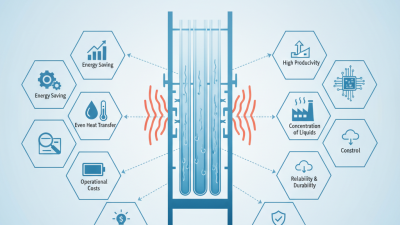
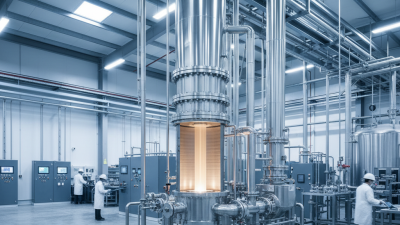
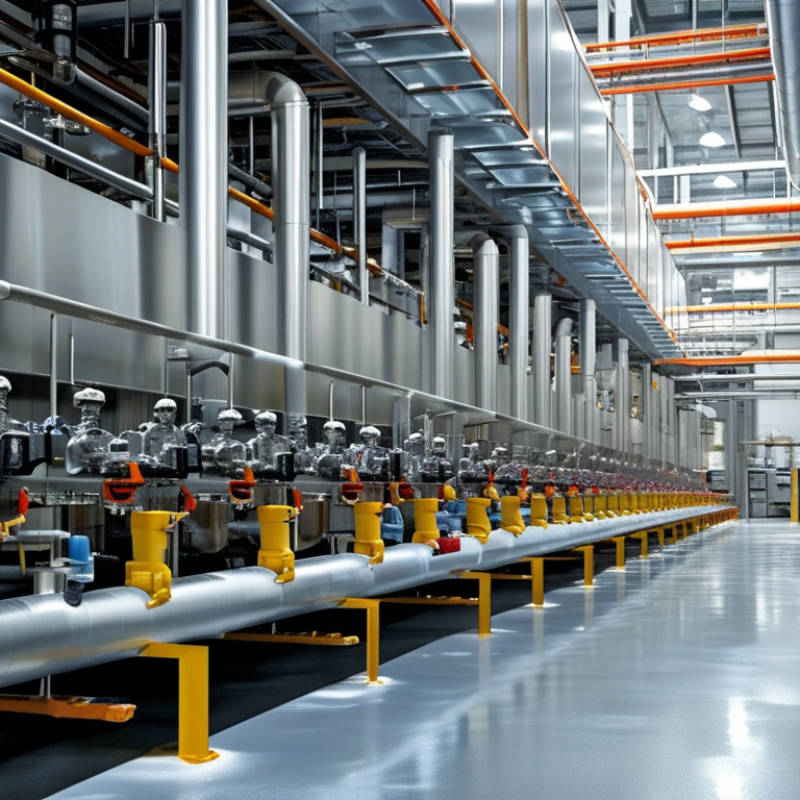
A falling film evaporator spreads feed liquid across the top of vertical heating tubes. A distributor forms a thin film along each inner wall. Gravity pulls the liquid downward while steam condenses outside the tubes. Heat passes through the metal surface, and part of the liquid vaporizes. The vapor exits through a separator, while concentrated liquid continues downward. The process is gentle and fast.
Short residence time matters. It can reduce thermal damage in heat-sensitive products. Vacuum operation lowers the boiling temperature further. Multiple effects can reuse vapor from one stage in another. The U.S. Department of Energy’s Industrial Decarbonization Roadmap states that process heating represents about 51% of industrial energy use. This makes heat recovery more than a technical detail.
The International Energy Agency’s Energy Efficiency 2023 report identifies industry as responsible for roughly 37% of global final energy consumption. Proper distribution therefore deserves serious attention. Poor wetting creates dry patches, scale, and unstable concentration. Commissioning teams should inspect spray patterns, pressure drops, and condensate drainage. Small errors become expensive quickly. A falling film system is efficient, but not automatically efficient. Product viscosity, fouling tendency, and feed temperature still control real performance.
Top 10 Advantages of Falling Film Evaporator: Improved Heat Transfer and Energy Efficiency
A falling film evaporator spreads liquid into a thin layer across heated tubes. This shortens the heat-transfer path and reduces resistance. Lower resistance means faster evaporation at lower temperature differences. In practical operation, well-designed units often achieve heat-transfer coefficients around 2,000–6,000 W/m²·K. The actual result depends on viscosity, fouling, concentration, and distribution quality. Small nozzles matter more than expected.
Energy savings become clearer in multiple-effect systems. Engineering calculations commonly show three-effect evaporation reaching about 2.5–3 kilograms of water removed per kilogram of live steam. A single-effect system usually approaches one kilogram. The European Commission’s 2019 BAT Reference Document identifies multiple-effect evaporation and vapor recompression as important energy-saving techniques. The U.S. Department of Energy’s 2022 Industrial Decarbonization Roadmap also reports that process heating represents roughly 51% of industrial energy use in the United States. That makes every recovered kilogram of vapor valuable.
Falling film designs also support vapor recompression and condensate heat recovery. These features can reduce fresh steam demand, although savings vary widely. Poor liquid distribution can create dry spots, scaling, and uneven product quality. I would not promise maximum efficiency from geometry alone. Operators should measure steam economy, outlet concentration, pressure, and fouling trends during real production. It is less glamorous, but better evidence.
| No. | Advantage | How It Works | Typical Performance Indicator | Practical Benefit |
|---|---|---|---|---|
| 1 | Improved Heat Transfer | A thin liquid film flows over heated surfaces, reducing the distance for heat to pass through. | Typical overall heat-transfer coefficients: approximately 1,000–4,000 W/m²·K, depending on fluid and operating conditions. | More heat can be transferred through a relatively compact heating surface. |
| 2 | Lower Energy Consumption | Multiple-effect arrangements and vapor recompression can reuse vapor energy in subsequent heating stages. | Steam economy commonly increases with the number of effects; a well-designed multi-effect system may achieve roughly 2–6 kg of water evaporation per kg of live steam. | Reduced steam demand and lower operating costs compared with single-effect evaporation. |
| 3 | Short Residence Time | The liquid forms a rapidly moving film rather than remaining in a deep pool inside the evaporator. | Residence time is often measured in seconds to a few minutes, depending on equipment size and circulation rate. | Helps limit thermal damage, discoloration, and loss of heat-sensitive product qualities. |
| 4 | Lower Operating Temperature | Operation under vacuum lowers the boiling temperature of the liquid. | The boiling point decreases as absolute pressure decreases; the exact reduction depends on product composition and vacuum level. | Suitable for products that may degrade, oxidize, or change color at higher temperatures. |
| 5 | Efficient Use of Heating Surface | Uniform liquid distribution creates a large wetted area across the internal heat-transfer tubes. | High surface-area-to-volume utilization compared with many batch-style evaporation systems. | Can provide high evaporation capacity without requiring an equally large liquid inventory. |
| 6 | Gentle Product Handling | The process uses a thin film and generally avoids prolonged agitation or extended exposure to heating surfaces. | Appropriate for many low- to medium-viscosity liquids when distribution and temperature are correctly controlled. | Helps preserve flavor, color, aroma, nutrients, and other temperature-sensitive characteristics. |
| 7 | Continuous Operation | Feed, evaporation, concentration, and discharge can occur continuously under steady operating conditions. | Designed for stable throughput and consistent concentration when feed properties remain within the specified operating range. | Supports automated production and reduces interruptions associated with batch heating and cooling. |
| 8 | Flexible Multi-Effect Integration | Vapor from one effect can serve as the heating medium for the next effect operating at a lower pressure. | Common configurations use two to six effects, subject to product, utility, and capital-cost requirements. | Allows energy performance to be matched to plant capacity and available steam conditions. |
| 9 | Compact Installation | High heat-transfer rates and vertical tube arrangements can provide substantial evaporation capacity within a limited footprint. | The required footprint varies with capacity, number of effects, product properties, and auxiliary equipment. | May reduce building space, piping distance, and installation-area requirements. |
| 10 | Reduced Product Hold-Up | Only a relatively small quantity of liquid is held in the evaporator during operation because the process relies on a flowing film. | Lower liquid inventory than many pool-boiling or batch evaporation arrangements of comparable duty. | Reduces start-up and changeover losses and can simplify cleaning and product recovery. |
Note: Performance values are typical engineering ranges or qualitative indicators. Actual results depend on feed composition, viscosity, solids concentration, fouling tendency, vacuum level, temperature difference, tube dimensions, and operating control.
Falling film evaporators spread liquid into a thin, continuous film along heated tubes. This design shortens the liquid’s contact time with heat. That matters when processing milk, fruit concentrates, plant extracts, or pharmaceutical solutions. Colour, aroma, vitamins, and active compounds can degrade quickly under severe heating. In practical trials, operators often see fewer burnt deposits and less darkening.
Not always.
Lower residence time can also reduce the thermal damage caused by prolonged boiling. The U.S. Department of Energy’s Industrial Decarbonization Roadmap identifies process heating as roughly half of industrial energy use. A well-designed falling film system may reduce steam demand through multiple-effect operation and vapour recompression. However, energy savings depend on feed viscosity, solids content, fouling, and cleaning schedules. Equipment alone cannot fix poor process control.
The FAO’s State of Food and Agriculture 2019 reported that about 14% of food is lost between harvest and retail globally. Gentle concentration can help manufacturers preserve more usable material during processing. It may also support more consistent solids content and easier downstream packaging. Engineers should monitor film distribution, inlet temperature, vacuum stability, and outlet moisture. A thin film is not automatically uniform. Dead zones, unstable feeding, or excessive fouling can still damage sensitive products. Small pilot tests remain valuable before full-scale installation.
Falling film evaporators distribute liquid as a thin layer inside heated tubes. This design shortens the heating path and improves heat transfer. In practical plants, product residence time is often measured in seconds, not minutes. That matters for milk, juice, extracts, and other heat-sensitive liquids. The European Commission’s 2019 Best Available Techniques Reference Document lists falling-film evaporation as a suitable high-throughput technology for food processing. Its continuous operation also reduces filling, draining, and restart delays. More uptime can raise daily output without expanding the entire production line.
The capacity advantage is measurable. Engineering references commonly place evaporation rates around 30–100 kilograms of water per square metre per hour, depending on feed properties and operating conditions. The U.S. Department of Energy reports that process heating represents about 61% of manufacturing energy use. Faster evaporation can therefore support both production and energy management.
However, the promise is not automatic. Poor liquid distribution, fouling, or unstable vacuum can reduce capacity sharply. Small tubes need careful inspection. Real performance also depends on viscosity, solids content, temperature, and steam pressure. Operators should validate results with plant data, not catalogue estimates. A faster machine is not always a better process.
A falling film evaporator supports simpler maintenance in demanding processing environments. Its liquid moves as a thin film along heated surfaces, reducing residence time and thermal stress. The evaporator body contains few moving parts, so routine inspections are easier. Technicians can check distributors, tubes, pumps, gaskets, and vapor lines without dismantling the entire system. This saves labor during planned shutdowns. It also helps teams identify fouling before heat transfer declines sharply. Clean surfaces matter.
Maintenance is not effortless. Uneven liquid distribution can create dry areas, scale, and unstable operation. Poor vacuum control may also increase boiling temperatures and product damage. These risks require reliable sensors, documented cleaning intervals, and trained operators. With suitable design, the same unit can serve dairy, plant-based liquids, extracts, chemicals, and wastewater streams. Capacity can often change through modular heating areas or parallel effects. That flexibility is useful when production volumes shift. However, one configuration rarely fits every product. Viscosity, foaming, solids, and heat sensitivity must guide equipment selection.
Tips: Keep a simple maintenance log. Record pressure, temperature, flow, and cleaning results after each run. Inspect spray nozzles and distribution plates regularly. Do not wait for visible scale. A small warning can prevent a long outage. Review operating data with technicians, because real plant behavior may differ from design assumptions.