
Employment Application Apply
Why Choose a Short Path Evaporator for Your Business?
Choosing the right concentration technology can shape product quality, operating costs, and future growth. A short path evaporator offers a focused solution for heat-sensitive, high-value materials. It uses high vacuum and minimal residence time to move vapor across a short distance. This design can reduce thermal exposure, especially when processing botanical extracts, fragrances, specialty oils, and pharmaceutical intermediates.
Industry data supports a stronger focus on process efficiency. The International Energy Agency’s Energy Technology Perspectives 2024 highlights industrial efficiency as a major pathway toward lower energy demand and emissions. The U.S. Department of Energy also identifies process heating as a significant share of manufacturing energy use. These findings do not prove that every company needs short path evaporation. They do show why equipment selection deserves careful measurement.
In practical use, operators may see a thinner product film, fewer burnt residues, and faster recovery of valuable compounds. A short path evaporator can also reduce the distance vapor travels before condensation, improving separation under deep vacuum conditions. Small details matter. Seal design matters. Wiper speed matters. Feed viscosity matters.
The answer is not always yes. High capital costs, vacuum maintenance, and limited throughput can challenge smaller facilities. A system may look efficient on paper but perform poorly with unstable feed conditions. Buyers should compare pilot results, energy records, cleaning time, and supplier support before committing. Reports from the IEA and DOE provide useful context, but site-specific testing remains essential. That cautious step often separates a reliable investment from an expensive experiment.
What Is a Short Path Evaporator?
Why Choose a Short Path Evaporator for Your Business?
What Is a Short Path Evaporator?
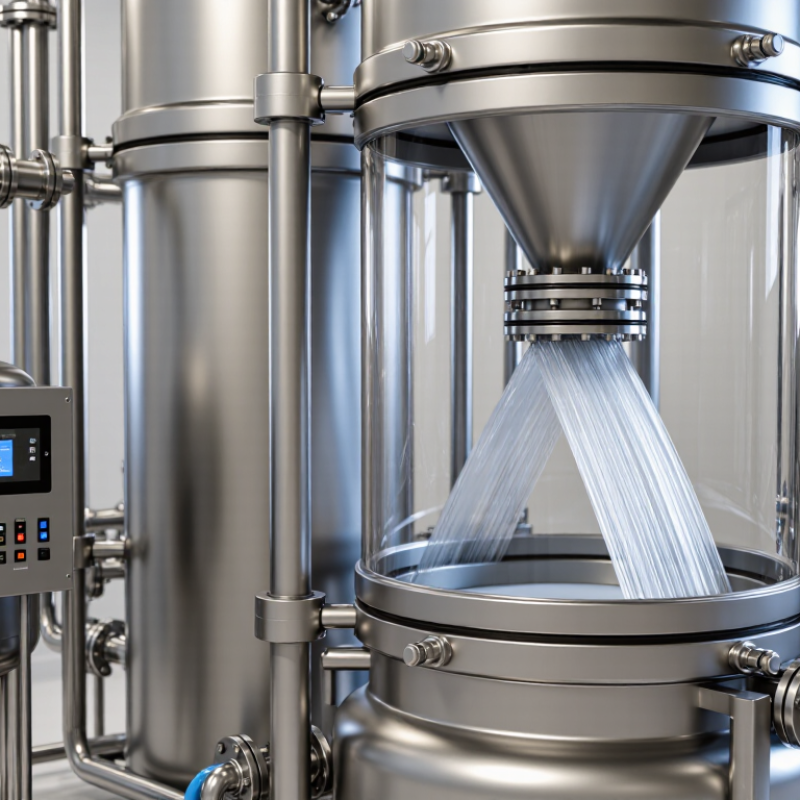
A short path evaporator is a thermal separation system for concentrating heat-sensitive liquids. It operates under deep vacuum, often at carefully controlled temperatures. The feed spreads across a heated surface as a thin film. Vapors then travel a very short distance to an internal condenser. This design reduces residence time and limits unnecessary heat exposure.
In practical operation, the liquid enters near the top and moves downward over the heated wall. A rotating wiper can improve film distribution and reduce buildup. The concentrated material leaves from the bottom, while lighter components condense separately. Operators monitor vacuum pressure, feed rate, temperature, and viscosity. Small changes can affect product quality.
This equipment suits specialty oils, purified extracts, fragrances, and other temperature-sensitive materials. It can preserve color, aroma, and functional properties better than longer thermal processes. However, it is not a universal solution. Cleaning may require patience, especially with sticky feeds. Poor vacuum control can also reduce separation efficiency. Pilot testing remains wise. Results depend on feed composition, boiling behavior, and equipment settings. A qualified process engineer should verify material compatibility and operating limits before installation. Mistakes happen. Careful records help reveal them.
Why Choose a Short Path Evaporator for Your Business? - What Is a Short Path Evaporator?
| Evaluation Dimension | Short Path Evaporator: Typical Characteristics | Conventional Vacuum Evaporator: Typical Characteristics | Business Value |
|---|---|---|---|
| Operating Pressure | Usually operates under deep vacuum, commonly about 0.001–1 mbar, depending on the product and design. | Often operates at a higher absolute pressure, frequently several to hundreds of millibars depending on the process. | Lower pressure reduces boiling temperature and can help protect heat-sensitive materials. |
| Typical Product Temperature | Often processes temperature-sensitive products at approximately 50–200°C, with the actual temperature determined by vapor pressure and feed properties. | May require a higher product temperature to achieve evaporation at its operating pressure. | Helps reduce thermal degradation, discoloration, oxidation, and loss of volatile components. |
| Residence Time | Typically measured in seconds to a few minutes because the liquid film travels a short distance on the heated surface. | May require longer residence times, especially in vessels with larger liquid holdup. | Short exposure can improve product quality and support faster processing of sensitive feedstocks. |
| Evaporation Mechanism | A heated surface forms a thin liquid film while an internal wiper or rotor spreads the product and promotes rapid vapor removal. | Common systems rely on boiling in a vessel, circulation loop, falling film, or forced-circulation heat exchanger. | Thin-film operation increases heat and mass transfer while helping limit localized overheating. |
| Suitable Feed Viscosity | Can handle many viscous, concentrated, and fouling-prone materials, subject to equipment geometry and feed characteristics. | Performance can decline when viscosity rises because circulation, pumping, and heat transfer become more difficult. | Supports processing of high-value concentrates, oils, extracts, polymers, and other difficult-to-evaporate products. |
| Volatile Component Recovery | Designed to separate volatile compounds at reduced temperatures; recovery depends on vapor pressure, condenser design, and feed composition. | May require higher temperatures or additional separation stages for the same volatile components. | Can improve recovery of solvents, aromas, light fractions, and other valuable volatile materials. |
| Product Hold-Up | Generally low because only a thin film is present on the heated surface during operation. | Often has a larger working volume, particularly in batch vessels and recirculation systems. | Reduces the amount of product exposed to heat and can lower material loss during start-up and shutdown. |
| Heat Transfer Performance | Thin-film spreading and continuous surface renewal typically provide high heat-transfer efficiency. | Efficiency depends strongly on circulation rate, viscosity, fouling, agitation, and heat-exchanger configuration. | May reduce the required heating area or shorten processing time for the same evaporation duty. |
| Fouling Management | Rotor or wiper action continuously renews the film and can reduce stagnant zones, although cleaning is still required. | Stagnant areas and concentrated boundary layers may increase fouling risk in some designs. | More stable heat transfer can improve uptime and reduce unplanned cleaning interruptions. |
| Energy Efficiency | Can reduce thermal load by operating at lower temperatures; total energy use still depends on vacuum generation, heating, condensation, and feed rate. | May require more heating energy when higher boiling temperatures or longer residence times are needed. | Potentially lowers operating cost, especially when processing heat-sensitive or high-boiling materials. |
| Product Quality Control | Offers controlled temperature, pressure, feed rate, rotor speed, and condenser conditions. | Control is available, but product quality may be more sensitive to vessel temperature, circulation, and residence-time variation. | Improves batch-to-batch consistency and helps maintain specifications for color, purity, concentration, and potency. |
| Scalability | Capacity is commonly increased through larger heated areas, higher feed rates, multiple units, or parallel processing. | Scale-up may involve larger vessels, longer circulation paths, or increased heat-transfer area. | Provides multiple expansion routes as production demand grows. |
| Capital Investment | Usually requires a heated evaporator, rotor assembly, vacuum system, condenser, receivers, controls, and product-specific auxiliaries. | Equipment cost varies widely and may be lower for simple duties but higher when extensive vacuum, circulation, or cleaning systems are needed. | Investment should be evaluated against product value, required throughput, quality targets, energy costs, and expected operating hours. |
| Best-Fit Applications | High-value, heat-sensitive, high-boiling, viscous, or difficult-to-separate products requiring gentle evaporation. | Large-volume products with lower sensitivity to heat and longer exposure times. | Helps businesses match evaporation technology with product sensitivity, throughput, and margin requirements. |
Note: The figures and operating ranges shown are typical industry ranges rather than guaranteed performance values. Actual results depend on feed composition, viscosity, boiling-point elevation, solids content, target concentration, vacuum level, heating medium, condenser capacity, and equipment configuration.
Related Posts
-
How to Choose a China Agitated Thin Film Evaporator?
-
2026 Best Agitated Evaporator Suppliers for Global Buyers
-
Best Short Path Distillation Equipment for Global Buyers?
-
Top 10 Tips for Using a White Film Evaporator Effectively
-

Wiped Film Evaporator Tips for Efficient Operation and Maintenance?
-
What is a White Film Evaporator and How Does It Work?