Top 10 Agitated Thin Film Evaporator Manufacturers?

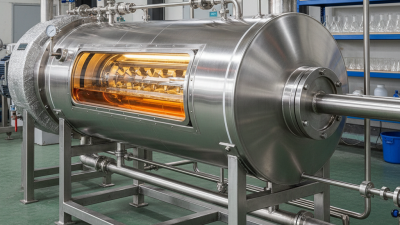
Choosing among the Top 10 Agitated Thin Film Evaporator Manufacturers requires more than comparing brochures. An agitated thin film evaporator spreads heat-sensitive liquid into a thin, moving film across a heated surface. A close-up inspection might reveal the practical details that matter: rotor clearance, seal design, finish quality, and how easily the unit can be cleaned. These choices affect product exposure, maintenance time, and operating stability.

There is no universal ranking that fits every plant. Feed viscosity, solvent load, target concentration, and available utilities can change which manufacturer is the right match. Ask for operating references using comparable materials, documented performance data, and clear service commitments. A polished demonstration is useful, but it cannot replace evidence from a similar production line. Some specifications also look better on paper than they feel during a shutdown.

One caution guides this comparison. Physicist Richard Feynman—not an agitated thin film evaporator industry specialist—said, “The first principle is that you must not fool yourself—and you are the easiest person to fool.” That reminder suits equipment selection: verify claims, question assumptions, and distinguish measured results from sales language. The manufacturers below are considered through practical criteria, including design capability, application support, reliability, and transparency. A shortlist can narrow the field. It cannot make the final process decision for you.
Top 10 Agitated Thin Film Evaporator Manufacturers?

Agitated Thin Film Evaporators: Rotor Design and Typical 0.1–1 mm Film Thickness

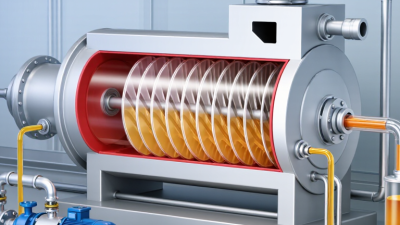
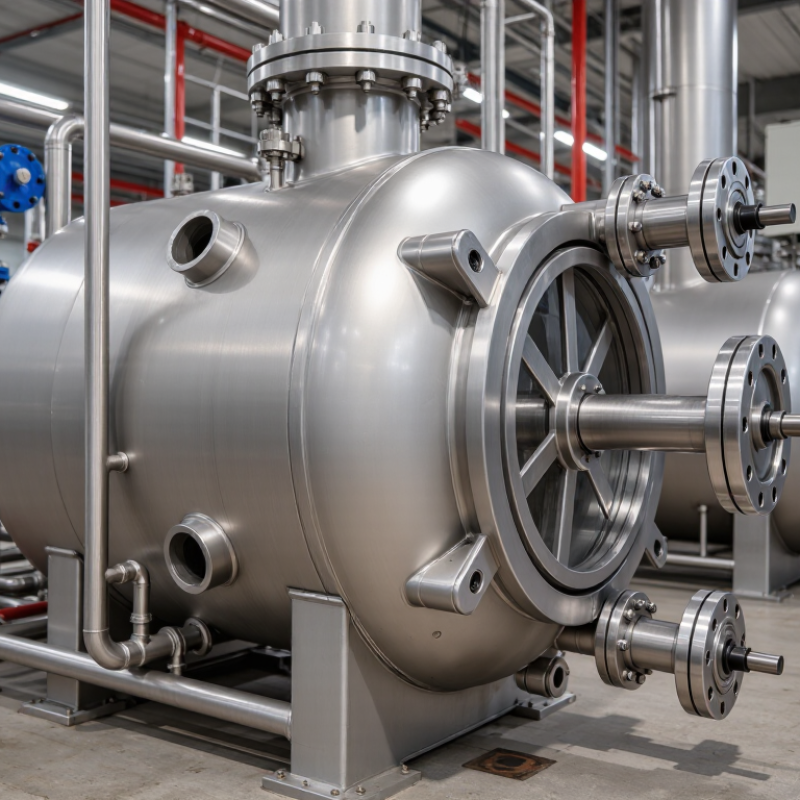
An agitated thin film evaporator uses a rotor to spread feed across a heated cylinder, creating a continuously renewed liquid layer. The 0.1–1 mm film range is a useful design reference, not a universal guarantee; actual thickness depends on feed rate, viscosity, rotor clearance, and speed. Perry’s Chemical Engineers’ Handbook, 9th edition, describes wiped-film equipment as suited to rapid heat transfer and short exposure. That matters for heat-sensitive liquids. The rotor does more than stir: blades or wipers distribute the feed, limit wall deposits, and move concentrated material toward the outlet. Small details matter.

Clearance and blade geometry shape the film. A tight clearance can improve scraping, yet viscous or solids-bearing feeds may demand a different rotor arrangement. Too much speed can increase mechanical stress without fixing poor feed distribution. The European Commission’s 2017 BAT Reference Document for Large Volume Organic Chemicals emphasizes process-specific energy and equipment choices; it does not establish one rotor setting for every feed. That limitation is easy to overlook. In practice, engineers should verify film behavior using feed trials, temperature profiles, and product quality data. The stated 0.1–1 mm band is a starting point, not proof of performance.

Operating Benchmarks: Seconds-to-Minutes Residence Time and Vacuum Duty

Top 10 Agitated Thin Film Evaporator Manufacturers? Operating Benchmarks: Seconds-to-Minutes Residence Time and Vacuum Duty

For heat-sensitive feeds, agitated thin film evaporators are often assessed by how quickly material leaves the heated wall. A practical screening benchmark is seconds to a few minutes of residence time, not a guaranteed value. Film thickness, rotor speed, viscosity, and feed rate all shift the result. Perry’s Chemical Engineers’ Handbook, 9th edition, describes thin-film evaporation as suited to short thermal exposure. Still, real performance must be confirmed with the actual feed. A clear-looking sample is not enough.

Vacuum duty needs equal care. Specify absolute pressure at the evaporator, not just the vacuum-pump inlet. An initial design screen may consider roughly 1–100 mbar, then narrow the range using feed volatility and target outlet temperature. NIST Chemistry WebBook vapor-pressure data can help estimate boiling behavior for known compounds, but mixtures may behave differently. Condenser load, air leakage, and vapor-line pressure drop also matter. Small leaks count.

Tips: Request test data showing feed rate, pressure, wall temperature, and measured residence time. Check whether the test used your feed. If not, treat the benchmark as provisional.

Top 10 Manufacturers: Product Portfolios and Industry Applications

A practical comparison of ten agitated thin-film evaporator suppliers should focus on portfolio fit, not catalog size. Look for ranges covering laboratory, pilot, and production scales, plus vacuum packages, condensers, feed systems, and optional short-path configurations. These systems suit viscous or heat-sensitive streams because a rotating wiper spreads material into a thin film across a heated surface. Common applications include concentrating food oils, purifying specialty chemicals, recovering solvents, and processing polymer intermediates. IEA’s Energy Efficiency 2023 report places industry at about 37% of global final energy demand in 2022; that figure is not specific to evaporators, but it underscores why heat recovery and steam use matter.

Supplier capabilities differ in wetted materials, rotor design, sealing, controls, and cleaning access. Compare these against feed viscosity, solids content, target residence time, and fouling risk. Ask for pilot-test results using a representative feed, not just water. A broad portfolio can look reassuring. It may not fit. I would also question claims of easy cleaning unless the supplier explains how the rotor, shaft seals, and discharge area are accessed.

Tips: Request a heat-and-mass balance, expected throughput, and product-temperature profile. Confirm whether stated capacity assumes your feed conditions; small differences in viscosity can change performance.

Compare Equipment Specifications: Heat-Transfer Area, Throughput, and Wetted Materials

When comparing agitated thin film evaporator manufacturers, start with heat-transfer area, but do not treat it as a performance guarantee. A larger area may support higher evaporation rates, yet feed viscosity, boiling point, and fouling behavior can change the result. Ask for the stated area and the conditions behind any throughput figure. Was the estimate based on water, or on a process fluid closer to yours? Small details matter.

Throughput figures are useful only when their basis is clear, including feed rate, target concentration, and operating pressure. Request a process-specific estimate, and check whether the unit can handle start-up and variable feed conditions. Wetted materials need equal scrutiny. Compare the rotor, cylinder, seals, and discharge components against your fluid’s temperature and chemistry. A single material listing may not describe every contact surface. Review drawings and material certificates where available. Also ask how the manufacturer defines cleanability and inspection access; a narrow service opening can make routine checks awkward. It is tempting to rank suppliers by headline capacity. That shortcut can mislead. Specifications still leave uncertainty, so note which assumptions need pilot testing or confirmation before selection.

Agitated Thin-Film Evaporator Specifications: Heat-Transfer Area, Throughput & Wetted Materials

Manufacturer-neutral reference calculation. The chart shows theoretical water evaporation rates and corresponding heat-transfer areas at three heat-input levels; it is not a ranking or a set of manufacturer ratings.

Assumptions: Water latent heat = 2,257 kJ/kg; overall heat-transfer coefficient = 500 W/m²·K; temperature difference = 20 K. Actual throughput and required area depend on the product, operating conditions, fouling, and equipment design.

Wetted materials: Common options include 316L stainless steel, duplex stainless steels, and nickel-based alloys. Material selection depends on corrosion resistance, temperature, and product compatibility.

Selection Criteria: Feed Viscosity, Fouling Risk, and Thermal Sensitivity

For agitated thin film evaporators, shortlist manufacturers by how well their designs handle your actual feed, not by headline capacity. Viscosity must be checked at operating temperature; a cool-feed value can mislead. Ask for viscosity range, rotor clearance, and torque limits. Bring a representative sample, including its solids and solvent profile. Small details matter.

Fouling risk calls for evidence from trials: record wall deposits, scraper torque, and stable run time. Thermal sensitivity needs equally specific checks. Compare product temperature and residence time, not just jacket temperature.

The U.S. Department of Energy’s 2018 Manufacturing Energy and Carbon Footprints report identifies process heating as roughly half of manufacturing onsite energy use. That figure is not an evaporator-sizing rule, but it underscores why heat-transfer efficiency deserves scrutiny.

Request pilot data at realistic feed rates and confirm cleaning requirements. I would still question any guarantee based only on clean, low-viscosity test fluid. Real feeds are less cooperative.