Employment Application Apply
Top 10 VTA Thin Film Evaporator Suppliers Worldwide?
Choosing among the top 10 VTA thin film evaporator suppliers worldwide requires more than comparing brochures. These systems handle heat-sensitive, viscous, or high-boiling materials under controlled vacuum conditions. Small design differences can affect residence time, product quality, cleaning effort, and operating costs. A reliable supplier should explain those differences clearly.
This guide examines manufacturers through practical criteria, including equipment design, evaporation capacity, vacuum performance, material compatibility, automation, testing services, and after-sales support. It also considers installation experience across chemical, pharmaceutical, food, polymer, and specialty-material applications. Factory trials matter. A supplier may provide impressive specifications, yet deliver limited support during commissioning. That gap deserves attention.
The ranking is an informed comparison, not an absolute judgment. Supplier capabilities can change with regional offices, engineering teams, and product updates. Some companies publish detailed technical data; others require direct consultation. That is not always a weakness, but it makes independent verification important. Ask for references, test results, maintenance requirements, and clearly defined performance conditions.
Real-world details often reveal more than polished marketing language. Look for rotor configuration, heating-area design, seal arrangement, vacuum stability, and cleaning access. Also examine how quickly engineers respond when feed viscosity changes unexpectedly. Experience counts here.
Not every shortlist survives scrutiny.
Readers should use this overview as a starting point for technical discussions and procurement checks. The best vta thin film evaporator supplier is the one that matches your feed characteristics, production scale, compliance needs, and long-term service expectations.
What Is a VTA Thin Film Evaporator?
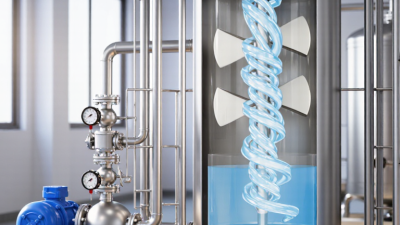
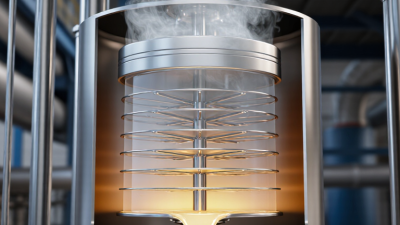
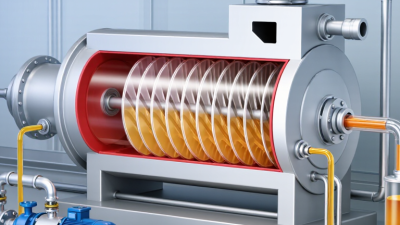
The phrase VTA thin film evaporator usually describes a vertical, agitated evaporator designed for gentle, efficient liquid concentration. Feed enters near the top of a heated cylindrical chamber. A rotating shaft spreads it into a thin film along the inner wall. Heat passes through the wall, while vacuum lowers the boiling temperature. The vapor exits separately, and the concentrated liquid moves downward.
This design suits viscous, heat-sensitive, or difficult-to-handle materials. Its short residence time can reduce thermal damage compared with long-boiling systems. A practical example is a dark, sticky feed entering the vessel and leaving as a thicker stream within minutes. Rotor speed, wall temperature, vacuum level, and feed rate strongly affect performance. Small adjustments matter.
Operators should inspect the rotor, seals, heating surface, and discharge path regularly. Fouling can begin as a barely visible coating, then reduce heat transfer quickly. The term “thin film” may sound uniform, but real films can become uneven when viscosity changes. That is an important limitation. Laboratory trials or pilot testing should confirm residence time, evaporation capacity, and product quality before scale-up. Material compatibility also deserves attention, especially with corrosive feeds or aggressive cleaning chemicals. A well-designed unit is not automatically a well-operated one.
Top 10 VTA Thin Film Evaporator Suppliers Worldwide? - What Is a VTA Thin Film Evaporator?
The comparison below uses anonymized supplier profiles rather than company or brand names. The ordering is an editorial comparison based on commonly published equipment capabilities, international project coverage, process breadth, and technical-support scope; it is not a certified market-share ranking.
| Rank | Anonymized supplier profile | Primary supply region | Typical VTA configuration | Typical heat-transfer area | Operating mode | Suitable feed characteristics | Common process applications | Typical engineering scope | Key selection consideration |
|---|---|---|---|---|---|---|---|---|---|
| 1 | Supplier Profile A Global process-equipment specialist |
Western Europe | Vertical wiped-film evaporator with optional short-path distillation section | Approximately 0.5–100 m² per unit, depending on duty and configuration | Continuous feed; single- or multi-stage vacuum operation | Heat-sensitive, viscous, fouling-prone, or high-boiling liquids | Pharmaceutical intermediates, specialty chemicals, polymers, oils, and nutraceuticals | Thermal design, rotor selection, vacuum integration, skid engineering, commissioning, and trials | Strong fit where residence-time control and pilot-to-production scale-up are critical |
| 2 | Supplier Profile B Vacuum evaporation technology provider |
Central Europe | Agitated thin-film evaporator with internally or externally heated shell | Approximately 1–80 m² per unit | Continuous operation with adjustable rotor speed | Moderate- to high-viscosity liquids and feeds containing suspended solids | Solvent recovery, resin concentration, chemical purification, and waste minimization | Process testing, mechanical design, heating and cooling systems, controls, and documentation | Rotor clearance and blade design should be matched to viscosity and solids loading |
| 3 | Supplier Profile C Pharmaceutical and fine-chemical equipment specialist |
Northern Europe | Hygienic vertical thin-film evaporator with cleanable product-contact surfaces | Approximately 0.5–60 m² per unit | Continuous, closed-system vacuum processing | Thermally sensitive products requiring controlled exposure to heat | Active pharmaceutical ingredients, botanical extracts, vitamins, and high-value chemicals | GMP-oriented design, surface-finish options, validation documentation, and factory acceptance testing | Confirm cleanability, material certificates, surface finish, and validation requirements |
| 4 | Supplier Profile D Industrial evaporation and separation supplier |
North America | Heavy-duty wiped-film evaporator for concentration and purification duties | Approximately 2–120 m² per unit | Continuous feed with optional recirculation loop | Organic liquids, polymers, lubricants, and high-boiling mixtures | Petrochemical derivatives, specialty polymers, industrial oils, and solvent recovery | Process simulation, equipment fabrication, instrumentation, installation supervision, and service | Evaluate vacuum-system capacity and condenser duty together with the evaporator |
| 5 | Supplier Profile E Custom process-system integrator |
East Asia | Modular VTA unit integrated with feed, heating, condensation, and control packages | Approximately 1–100 m² per unit | Continuous or semi-continuous, depending on product behavior | Low- to high-viscosity liquids with variable boiling ranges | Food ingredients, plant extracts, chemicals, oils, and solvent concentration | Turnkey skid design, automation, utility integration, operator training, and spare parts | Compare test data and after-sales support, not only equipment purchase price |
| 6 | Supplier Profile F Specialty separation equipment manufacturer |
Southern Europe | Wiped-film evaporator with optional molecular or short-path distillation stage | Approximately 0.1–50 m² per unit | Continuous high-vacuum processing | High-value, heat-sensitive, oxidation-sensitive, or difficult-to-distill feeds | Natural products, fragrances, specialty chemicals, pharmaceutical compounds, and oils | Pilot testing, high-vacuum design, internal condenser options, and process optimization | Check achievable pressure, leak-rate control, and product recovery under actual feed conditions |
| 7 | Supplier Profile G Process machinery supplier with regional service |
East Asia | Vertical thin-film evaporator for concentration and solvent-removal applications | Approximately 0.5–70 m² per unit | Continuous operation with variable wiping speed | Viscous liquids, concentrated solutions, and products with moderate fouling tendency | Food processing, chemical production, plant-based ingredients, and wastewater reduction | Basic process design, fabrication, automation, installation, and maintenance support | Verify materials of construction and local availability of critical replacement parts |
| 8 | Supplier Profile H Laboratory-to-pilot evaporation specialist |
Western Europe | Compact laboratory, pilot, and small-production VTA systems | Approximately 0.05–15 m² per unit | Batch-assisted or continuous pilot operation | Small-volume, high-value, heat-sensitive, or difficult-to-characterize feeds | R&D, formulation development, product recovery, and scale-up studies | Laboratory trials, pilot rental or testing, data logging, and scale-up recommendations | Useful when feed behavior is uncertain and process trials are needed before full scale-up |
| 9 | Supplier Profile I Large-scale chemical process equipment supplier |
North America | Large-diameter agitated thin-film evaporator for high-throughput service | Approximately 5–150 m² per unit | Continuous, multi-effect, or multi-stage process layouts | Large-volume chemical streams, concentrated residues, and high-boiling materials | Industrial chemicals, fuels and lubricants, polymers, and resource recovery | Plant engineering, heat integration, control systems, safety review, and field service | Assess throughput, utility consumption, allowable pressure drop, and maintenance access |
| 10 | Supplier Profile J Regional evaporation and separation fabricator |
South Asia | Custom vertical wiped-film or agitated thin-film evaporator | Approximately 0.5–60 m² per unit | Continuous vacuum operation, subject to feed properties | Low- to medium-viscosity liquids, solvents, oils, and chemical intermediates | Pharmaceutical chemicals, dyes, specialty chemicals, oils, and solvent recovery | Fabrication, inspection, pressure testing, control-panel integration, and installation support | Review design codes, welding quality, inspection records, and performance guarantees |