2026 Top Agitated Film Evaporator Types for Buyers
In 2026, choosing an agitated film evaporator is less about buying the biggest unit and more about matching heat transfer to the product. Grand View Research’s Industrial Evaporators Market Size, Share & Trends Analysis Report tracks market growth and technology demand, but market forecasts cannot determine whether a specific machine suits a buyer’s feed. That requires process data: viscosity, solids content, throughput, and the product’s tolerance for heat. Small details matter.
Common options include vertical wiped-film units, agitated thin-film evaporators, and short-path designs for high-vacuum service. A rotating blade spreads a thin layer across a heated wall; feed rate, rotor speed, and vacuum affect the film and residence time. The U.S. Department of Energy’s Improving Process Heating System Performance: A Sourcebook for Industry offers useful context on process-heat efficiency, though it is not a model-selection guide. Buyers should compare evaporation capacity, fouling behavior, cleaning access, materials, and energy use under representative operating conditions. No type wins everywhere.
A practical shortlist starts with the feed, not the brochure. Ask vendors for test results using similar viscosity and temperature limits, and check whether stated capacity includes real operating conditions. I would treat headline efficiency claims cautiously without a defined test basis. The numbers have limits. A modest pilot run can reveal film instability, buildup, or product changes that a specification sheet may miss.
What Is an Agitated Film Evaporator and How Does It Work?
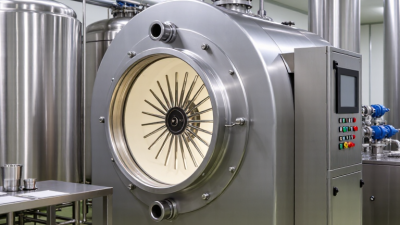
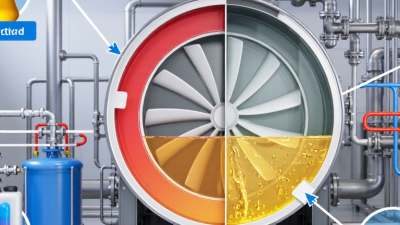
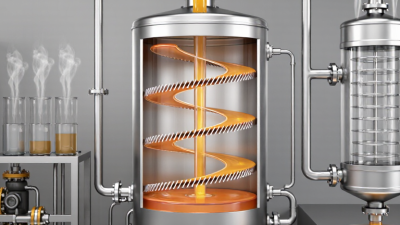
An agitated film evaporator concentrates liquids by spreading them across a heated vessel wall. Feed enters near the top, where a rotating assembly distributes it into a thin film. Wiper blades continually renew that film, helping limit stagnant areas and deposits. Heat passes through the wall, turning part of the liquid into vapor. The vapor exits through a separate outlet, while the more concentrated product moves downward. Under vacuum, the liquid can boil at a lower temperature. Thin, moving film.
This design suits viscous, heat-sensitive feeds, but “gentle” operation is not automatic. Excessive wall temperature or slow product movement can still cause degradation or fouling. Rotor speed, feed rate, pressure, viscosity, and cleaning access all matter; a trial with the actual material is more informative than a catalogue figure. The International Energy Agency’s Energy Efficiency 2023 report estimates that industry uses about 37% of global final energy. That figure is not specific to evaporation, but it underlines why heat losses and utility use deserve measurement. In practice, buyers should ask for test conditions, including feed composition and inlet temperature. Otherwise, quoted capacity may look precise while leaving the hardest question unanswered: how will the product behave in the machine?
2026 Top Agitated Film Evaporator Types for Buyers - What Is an Agitated Film Evaporator and How Does It Work?
An agitated film evaporator spreads liquid feed into a thin film across a heated surface. A rotating rotor or wiper continually renews and moves the film, supporting heat transfer and vaporization while limiting prolonged exposure to heat. Vapor leaves the evaporator separately from the concentrated liquid; exact performance depends on the feed, operating pressure, temperature, and equipment design.
| Evaporator type |
Basic configuration |
Typical feed characteristics |
Common applications |
Key advantages |
Buyer considerations |
| Vertical wiped-film evaporator |
A vertical heated cylindrical surface with a rotor that distributes feed into a moving thin film. |
Often selected for viscous, heat-sensitive, or fouling-prone liquids. Feed must be suitable for the chosen rotor and clearance design. |
Concentration and solvent removal in chemical, food, pharmaceutical, and specialty-material processes. |
Continuous film renewal can improve heat transfer and reduce the time material spends on the heated wall compared with many conventional evaporation arrangements. |
Check viscosity across the full process, solids and particle content, wall-cleaning needs, rotor style, and the required vapor-liquid separation. |
| Horizontal agitated thin-film evaporator |
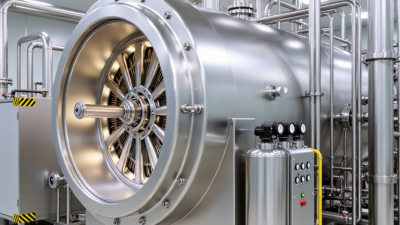
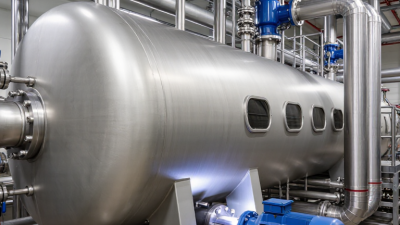
A horizontal heated cylindrical body with an internal rotor that spreads and conveys liquid along the heated surface. |
May suit viscous feeds, concentrates, and some slurries, subject to particle size, solids loading, and equipment-specific limits. |
Concentration, devolatilization, and recovery of volatile components from process streams. |
The rotor promotes surface renewal and axial movement, and the horizontal layout can be suitable for continuous processing. |
Confirm discharge behavior for concentrated product, rotor access for maintenance, and whether the feed can be reliably distributed across the heated surface. |
| Short-path (molecular) wiped-film evaporator |
A wiped-film evaporator operated under high vacuum, with a condenser positioned close to the heated evaporation surface. |
Typically considered for high-boiling or heat-sensitive materials where low operating pressure and a short vapor path are important. |
Purification or fractionation of specialty chemicals, oils, and other high-boiling products. |
High vacuum and a short distance between evaporation surface and condenser can support evaporation at reduced temperatures and limit vapor travel time. |
Assess vacuum-system capacity, condenser design, feed volatility and thermal stability, and the need for staged separation. “Molecular” does not mean every feed separates by molecular weight alone. |
| Multi-stage agitated-film system |
Two or more evaporation stages connected in sequence, potentially with different operating pressures or temperatures. |
Feeds requiring multiple concentration or separation steps, especially when a single pass does not meet the target specification. |
Staged concentration, solvent recovery, and fractionation processes. |
Each stage can be arranged for a defined process duty, providing flexibility in achieving a target concentration or product cut. |
Compare total installed complexity, interstage control, cleaning strategy, energy use, and whether pilot testing is needed to validate product quality and separation. |
Selection note: Evaluate the complete process duty rather than the equipment name alone. Important inputs include feed composition, viscosity versus temperature, boiling behavior, heat sensitivity, solids content, required throughput, final product specification, and available utilities.
Which Agitated Film Evaporator Types Are Available in 2026?
In 2026, buyers can choose among several agitated film evaporator configurations. A vertical wiped-film unit spreads liquid into a thin layer using rotating blades or wipers. It suits heat-sensitive, viscous feeds that may foul conventional heated surfaces. Horizontal designs can help with materials that are difficult to distribute evenly in vertical equipment. Short-path, or molecular-distillation, units place a condenser close to the heated surface, supporting evaporation under deep vacuum. Batch and continuous versions are also available. Not interchangeable.
Selection depends on viscosity, solids, residence time, vacuum needs, and cleaning access. The U.S. Department of Energy’s 2022 Industrial Decarbonization Roadmap identifies process heating as about 51% of U.S. manufacturing energy use, making thermal efficiency a practical consideration. The IEA’s Energy Efficiency 2023 report estimates that industry represented roughly 37% of global final energy use in 2022. These figures describe industry broadly, not evaporators alone. Still, they underline why buyers should compare heat demand alongside throughput. Ask for operating data using a feed similar to yours, and check blade clearance, seals, and discharge temperature. A pilot trial may reveal fouling that a specification sheet misses. There is no universally best type; even experienced teams can underestimate feed variability.
Agitated Film Evaporator Types Available in 2026
Compare common configurations by two design features. A value of 1 means the feature is typically present in the standard arrangement; 0 means it is typically absent. Falling-film evaporation is included as a non-agitated comparison.
Short-path wiped-film units typically place a condenser inside the evaporator body. Actual configurations can vary by process requirements and equipment design.
How Do the Main Types Differ in Design and Performance?
Agitated film evaporators are not one uniform design. In a wiped-film unit, rotating blades spread feed into a thin layer across a heated wall. Blade shape, clearance, and rotor speed affect film renewal and shear. These choices influence heat transfer, residence time, and handling of viscous or heat-sensitive products. Short-path configurations place a condenser close to the heated surface, reducing vapor travel under vacuum. Terminology varies between suppliers, so compare drawings, not labels alone.
Tips: Ask for test data using a feed similar to yours. Check throughput, product temperature, and cleaning time. Tiny details matter: rotor clearance can change performance.
Buyers should also compare vertical and horizontal layouts, seal arrangements, and access for maintenance. A faster rotor may improve mixing, but it can increase shear and wear. Fouling behavior depends on the actual material, not just its stated viscosity. There is no perfect choice. Pilot trials are useful, though results may not fully predict long-term operation. Request operating limits and confirm how the supplier measured them.
What Should Buyers Compare When Choosing an Evaporator Type?
When choosing an agitated film evaporator, compare the feed before comparing equipment labels. Measure viscosity, solids content, heat sensitivity, and changes in composition during concentration. A wiped-film design can suit viscous or heat-sensitive feeds when short residence time matters; other agitated designs may better fit different capacities or operating conditions. Ask suppliers for residence-time data, evaporation rates, and test results using a representative feed—not just water.
Energy deserves close scrutiny. The U.S. Department of Energy’s 2015 guide, Improving Process Heating System Performance, estimates that process heating accounts for about 17% of U.S. manufacturing energy use. That figure is not an evaporator benchmark, but it shows why buyers should compare steam or electrical demand, vacuum requirements, and heat recovery. Also check cleanability, seal access, metallurgy, and maintenance intervals. A neat spreadsheet can miss awkward cleaning access. Real plants do.
Tips: Request a trial with your actual feed. Record throughput, product temperature, final concentration, and energy use. Compare the results against your production target; a small test may not predict every scale-up issue.